
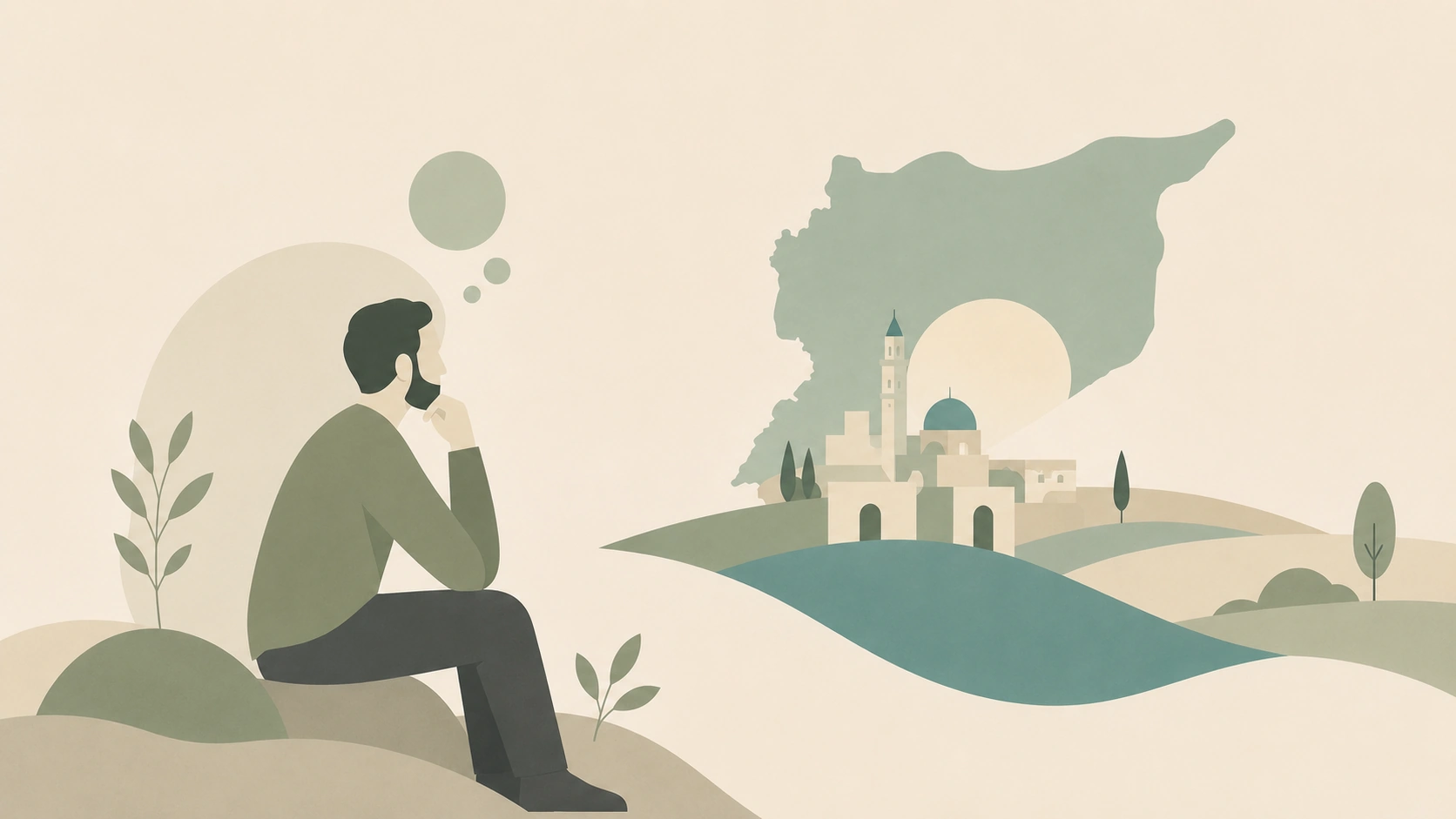
In the new Syria, where are the psychologists and sociologists today? Today is truly your day.
Countries emerging from revolutions are usually preoccupied with rebuilding roads, bridges, and buildings, and with reshaping state institutions and the economy. Yet global experiences confirm that the most difficult reconstruction process is neither physical nor political. It is the rebuilding of society’s behavior.
Today, Syria stands before this historic task.
After decades of authoritarian rule followed by years of revolution, the greatest challenge is no longer simply building ministries or issuing laws, but building a new culture based on respect for the law, commitment to order, and placing the public interest above personal interests.
A modern state is not built on the sheer number of laws, but on citizens’ willingness to respect them voluntarily.
Behavioral Discipline Is the Priority
Perhaps the most important national project we need today after the revolution is a project of behavioral discipline.
Behavioral discipline includes:
Respecting the law even in the absence of supervision.
Rejecting favoritism and nepotism as violations of the rights of others.
Respecting public property.
Following traffic rules and public order.
Accepting equality before the law, whether a ruling is in our favor or against us.
Freedom does not mean the absence of order. It means having a system that protects everyone without exception.
This Is Not the Task of Preachers on Pulpits... but of Scientists in Laboratories
Many people may believe that changing behavior can be achieved through speeches, lectures, or moral appeals alone.
Modern human sciences say otherwise.
Reshaping social behavior is a scientific process based on research, experimentation, and measurement, led by psychologists, sociologists, and specialists in human behavior and mass communication.
Just as a ministry of health relies on doctors and a ministry of public works relies on engineers, building a cohesive society requires scientists who study the human being itself. So where are they today?
What Should Psychologists Do?
Their first task is to understand the psychological condition of Syrian society after years of revolution.
What is the level of trust between people?
How much fear still governs behavior?
How do citizens view state institutions?
Why do people resort to favoritism?
Why do they retreat into their sect or tribe?
What makes a person respect the law or violate it?
The answers must not be based on impressions, but on field studies, opinion surveys, and scientific research representing different governorates and age groups.
Programs should also be designed to address the effects of psychological trauma, strengthen a sense of responsibility, and build confidence in the new institutions.
What About Sociologists?
Sociologists focus more on collective behavior than on the individual.
They study the reasons behind the spread of phenomena such as favoritism, weak trust in institutions, social divisions, and people’s attitudes toward authority and the law.
They also measure how successful government policies are in changing behavior and provide evidence-based recommendations rather than relying on speculation.
It is not enough for the state to launch a media campaign calling for respect for order. It must first understand why some citizens do not respect it and which methods are most effective in changing that behavior.
We Need a "National Observatory for Social Behavior"
One of the most important projects the state could launch is a national center bringing together experts and specialists in psychology, sociology, statistics, media, and education, whose mission would be to continuously study behavioral transformations in Syrian society.
The observatory could measure indicators such as:
The level of trust between citizens and the state.
The level of trust among citizens themselves.
The prevalence of favoritism and nepotism.
Respect for the law.
The sense of national belonging.
Acceptance of differences.
The prevalence of sectarian or exclusionary thinking.
What cannot be measured cannot be developed.
Education and Media Are Partners in Change
Once researchers identify the nature of the problem, the role of schools and media begins.
Schools instill behavior from childhood through daily practice even before textbooks.
The media, meanwhile, should not limit itself to reporting news. It should lead a long-term national campaign to reinforce the values of citizenship, discipline, and responsibility.
We need television programs, short films, awareness messages, digital content, and social media campaigns that present citizens with positive models of respect for the law and explain that favoritism, for example, is not cleverness but injustice, and that respecting order is not weakness but civilization.
Drama and media should also stop glorifying characters who circumvent the law or portray violating regulations as a form of cleverness.
The Success of the Revolution Is Not Measured Only by the Fall of the Regime
The revolution has succeeded, praise be to God, in ending the rule of dictatorship and the authority of fear and corruption, but its true success remains dependent on its ability to build a new person who believes that the law stands above everyone and that the public interest is no less important than personal interest.
The new Syria will not be built through construction projects alone. It will be built when respect for the law becomes a habit, order becomes a value, integrity becomes a culture, and citizenship becomes a daily behavior.