
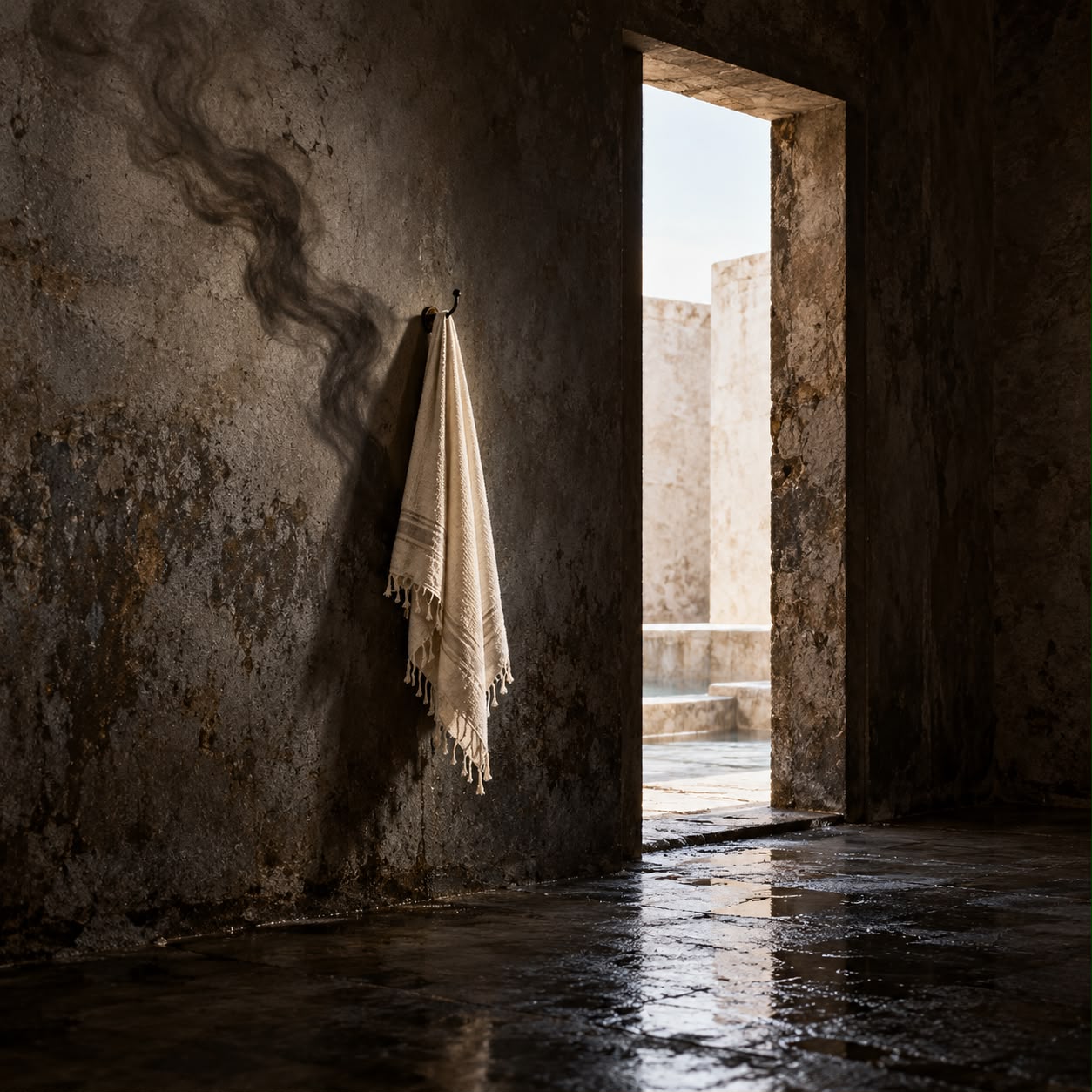
Those Who Felt Shy, Died… The Story Behind the Fire
We say it when we see someone push their rudeness too far, or cross the bounds of decency without a flicker of hesitation. A short phrase, tossed out sometimes with a mocking laugh, sometimes with regret, and then we move on. But the folk tale behind it carries a meaning far harsher than its everyday use.
Accounts differ on where and when it happened, and some tales link it to the old bathhouses of Damascus. Its details reach us the way many stories from popular memory do: passed from person to person, with each narrator adding something of their own language and imagination, until it becomes hard to separate what actually happened from what settled into the tale.
Before the Smoke Rose
The story begins in a public bathhouse, during hours set aside for women.
Inside, water echoed beneath the domes, steam obscured the far end of the hall, and conversations moved among the women sitting there. One asked about a new bride, another complained of household fatigue, a third recalled news from the neighborhood. On the benches, clothes waited for their owners to return.
The bathhouse was a respite from the day's concerns; a time for rest and company, after which the women would resume their ordinary lives.
Then everything changed.
The smell of burning crept in, followed by a scream:
“Fire!”
At first, some may have thought it could be contained. But the smoke began to thicken the air, and calls rose from the direction of the door. Reaching the exit became the only concern, and voices blurred together until words could no longer be distinguished.
One Door, Two Fears
The story tells of women who rushed outside, with the fire giving them no time to reach their clothes. They came out as they were, searching for air and for distance from the flames.
Others remained inside, held back by shame at the thought of appearing before people unclothed. Safety was only steps away, yet crossing that door into the eyes of passersby seemed to them something they could not bear to do.
Here the story reaches its harshest moment: when fear of other people's gaze becomes a barrier to survival.
We cannot truly know what passed through the minds of those women, or whether events unfolded exactly this way. Moments in which panic mixes with smoke are too complex to be reduced to a judgment on who left and who stayed. Some people run; others freeze. A chance at survival can be lost in a single moment of hesitation.
Yet the folk version kept its own explanation: those who could overcome their shame got out, and those who felt shy stayed, until the fire reached them.
The Words That Remained
After the fire was put out, people gathered, asking who had survived and who had remained inside.
In one version of the tale, the answer came from the bathhouse keeper; in another, from someone among the crowd:
“Those who felt shy… died.”
With these words the story ends, and the proverb begins its journey on people's tongues.
As it spread, it drifted away from the bathhouse tragedy, and came to be said in reproach of anyone who does as they please without regard for others, as if all sense of shame had vanished from the world. In other situations, it is said to someone hesitant to ask for their right or express their need, pushing them to overcome their shyness.
One phrase, carrying — depending on the situation — either a rebuke for the absence of modesty, or a warning against its excess.
What Is It That We Are Ashamed Of?
Whether the story truly happened, or took shape over time to explain the proverb, it leaves us with a question worth pondering: to what extent do we let others' gaze control our lives?
Modesty has its place — in respecting people, protecting their privacy, and being mindful of the effect our words and actions have on them. But shyness can become a burden when it stops someone from asking, from seeking help, or from defending their right. We may raise our children to fear what people will say, then wonder at their silence when they need to speak.
Perhaps the deepest lesson in this tale is its call for compassion toward anyone caught in a moment of weakness or necessity. The women who fled the fire were searching for survival, and those who stayed behind deserved mercy — without ranking degrees of shame among the victims of fear and flame.
The next time we say “those who felt shy, died,” perhaps we should pause a moment at the story carried within those words.
How many people simply need to be reassured that they can ask for help, without feeling ashamed?