
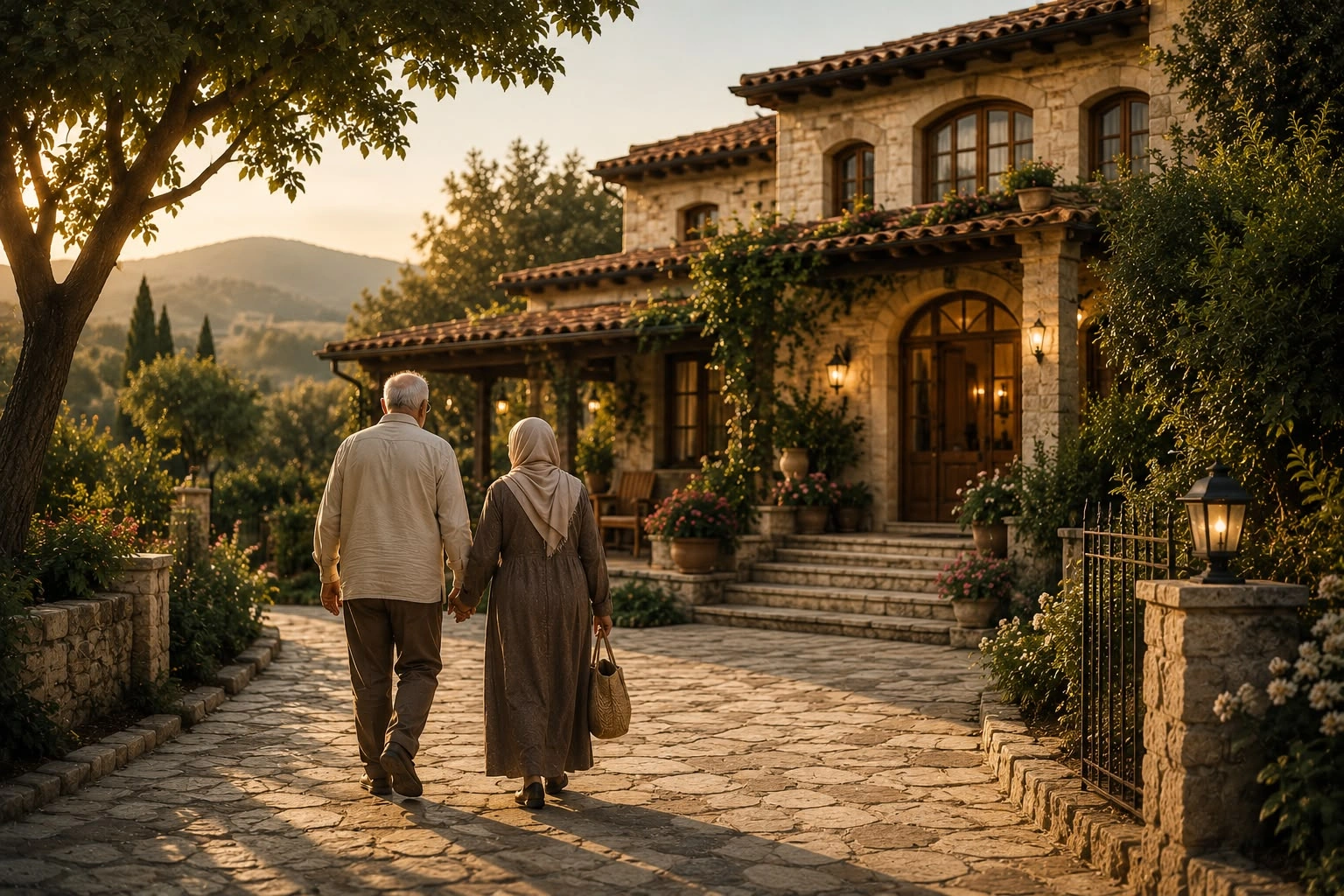
Morning coffee, Fairuz singing “Shu Hal Ayyam,” and a sigh from the middle of my heart for the life that passed so quickly while we were busy dreaming? I remembered a childhood moment when we visited a very kind family with my parents, but what caught my attention back then was their way of living, and how they were literally living on the bare minimum even though they were well-off. At my young age, I asked my father: Why are they living like this?
At the time, he told me: Most expatriates say, “We will endure five or seven years at most and return,” and maybe we said it too..
Five years to put our affairs in order. Five years to build the house. Five years to secure the children’s future. Then five years pass... and another five come... and the children who were supposed to return to their countries before entering school grow up.
At this exact stage, people usually split into two groups. The first group decides to live life as it is.. to make peace with exile and with the new country, to discover its streets, try its restaurants, travel, buy what they need without guilt, and treat life as a real life, not merely a long waiting station.
As for the second group, they are the heroes of the grand return project.. the heroes of the project of patience. The one who sleeps on a mat so he can ship the bed. Sits on the floor so he can ship the living room set. Postpones comfort to buy a bedroom. Postpones travel to buy a chandelier. Postpones all of life until the house he will return to one day is complete.. You enter his home in exile and think it has been in the process of being furnished for twenty years, but if you saw the house back home, you would discover a small palace being completed stone by stone, while its owner is still counting the days separating him from return.
But do you know what is sad about it: that if luck is on his side and the house is not stolen, like many stories we have heard, everything will be old by the time he decides to return, so he will have enjoyed neither his life nor the furniture.
It is as though the scene awakens in us something of both irony and confusion.. The house grows more beautiful year after year.. while its owner continues to postpone his life to a date that has not yet arrived.
But the truth we learned later is that mocking this model is easy... and understanding it is much harder. Because life proved that each of the two groups carried part wisdom and part illusion.
Just as we knew people who spent their lives building a future they never lived, we also knew others who decided to live the present fully. They enjoyed everything they earned. They traveled. They spent. And they said with confidence: “Why should we live our exile twice?”
And their logic was convincing too. But life gives guarantees to no one. How many people thought exile had become a permanent homeland, only to be surprised by the end of a contract, a change in regulations, an economic crisis, or a health condition that returned them to the starting point.. They returned to their country carrying beautiful memories... but with fewer plans than they had expected.
And just as some who saved for everything did not live life as they should have, some who lived life as they should have did not save enough.
That is why I cannot say that either group was completely right.. Life is not that simple of an equation.
The one who slept on the mat was not always stingy; he was trying to protect himself from an unknown future. And the one who enjoyed his day was not always reckless; he was trying not to let the years of his life disappear in a long waiting room.
Both were acting out of fear. One feared returning with nothing. The other feared losing his life while waiting.
Perhaps that is why moderation has always been the gentlest option. To build your house.. but without demolishing your days for its sake. To save for the future.. but without depriving yourself of the present. To dream of return.. but without postponing life until it arrives. And to live life.. but without acting as though the future will never come.
The Greek philosopher Aristotle says that virtue often lies in the middle between two extremes.. and perhaps this applies to exile more than anything else.
Wisdom is not to live for the future alone. Nor is wisdom to live for the present alone. Wisdom is knowing how to give each one its right.
Because the house is important.. but the life that passes while you are building it is more important.
And because a beautiful return does not need only a ready house.. but also a person who lived the road, not merely the end of the road.
And there is none of us who has not encountered one of these two models.. if they were not already one of them.