
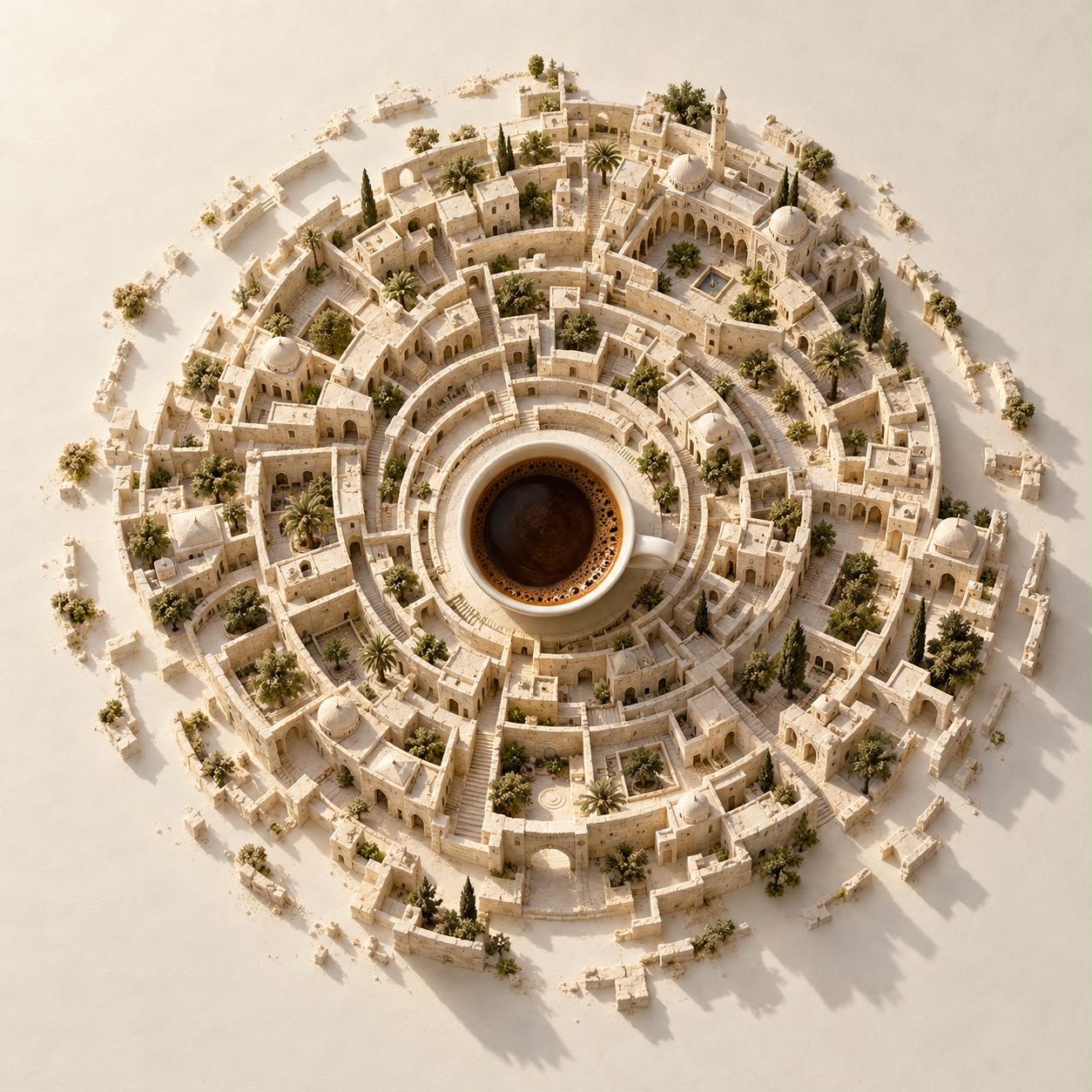
I sometimes think of the Syrians scattered across the world's cities, and of the relationships they built during their years away. Each of them has a colleague, a friend, or a neighbor through whom they came to know Syria before they ever found it on a map. They ate with them, entered their homes, heard a piece of their story, and perhaps learned an Arabic word from them.
What if each of us invited just one person to visit Syria?
A friend to whom we might say: come, let me introduce you to the country I came from. We will walk its streets, sit with its people, eat at a place I love, and hear the story from those who live it.
The idea seems small before a country that needs so much work. But through my work in media and marketing, I know the value of a recommendation that comes from someone we trust. We may watch a beautiful advertisement and forget it, while a friend's invitation stays with us for years, until the moment comes when we answer it.
Perhaps we can think of marketing Syria from this angle: that its image abroad begins with a human relationship, and with an experience worth telling.
That visitor might spend a few days and then return home. During the visit, they stay in a hotel, eat in a restaurant, buy from a craftsman, travel with a driver, and meet people they would never have met without the invitation. They might find a business opportunity or a collaboration, or simply leave with a beautiful photograph and a fond memory to share with friends.
We do not know where a single visit might lead. But we know it creates an encounter that would not otherwise have happened, and gives people a chance to be seen and heard, far from the usual news and images.
Yet whenever I think of inviting others to Syria, I find myself facing a closer question: how much do we know about each other?
Many of us grew up hearing ready-made judgments about the people of another city, a nearby village, or even the neighboring quarter. We repeat the same joke, the same description, and inherit an attitude toward people we have never once sat with. Sometimes we knew more about a distant country than about a town less than an hour away.
The former regime deepened the distances between Syrians, and fear corrupted their relationships with one another. Caution became part of conversation, asking about the other became an opening for suspicion, and difference became a reason for distance. Over time, our circles narrowed, and much of what we knew about one another remained secondhand stories and judgments we never paused to test.
Then came the years of war and displacement, adding painful experiences to these distances—each of us living through a part of it, and sometimes believing we knew the rest.
This is why I believe that rebuilding Syria also requires a new acquaintance among Syrians themselves.
That we visit a place we have never visited before, and sit with people who do not resemble our usual circle. That we ask about what they make, how they have lived, what they love about their city, and what they wish us to know about them. And that we give ourselves the chance to change an old opinion, without feeling that we are losing any part of our identity.
How can I invite a friend to visit Syria if I reduce it to my own city? And how can I tell him about its richness if I cannot see the value of what another Syrian possesses?
In every region there is something worth discovering: a craft its people have mastered, a crop they take pride in, a cuisine with its own story, a music, or a small project whose owner is trying to find it a place. And there are people working quietly, whom we pass by without knowing anything of their effort.
I want to be able to take pride in a Syrian success I do not know, from a city I have never lived in, just as I take pride in a friend's success. To point others toward a good project because its owner deserves it, and to speak about a beautiful place outside my own region with the same enthusiasm I use to speak of the streets of my childhood.
Then the phrase "this is our country" becomes wider in meaning, and truer in use.
Syrians abroad have a great opportunity in this effort. They have learned languages, come to know different societies and markets, and built relationships that no advertising campaign alone could reach. Each of them can open a small door: a visit, a business meeting, a collaboration between two universities, an order for a Syrian product, or an introduction to a craftsman whose work deserves a wider audience.
Being a good ambassador for your country begins with honesty. Inviting people to what you know and love, and being clear about the realities and conditions of the visit. The trust that brought your friend to come deserves to be preserved, and a good experience needs care that goes beyond beautiful photographs: clear information, a fair price, respectful service, and a promise kept.
Here, the responsibility widens to include all of us. Whoever extends the invitation, whoever receives the guest, whoever provides a service, whoever meets them along the way. Each of us leaves a mark on the story they will carry home.
I imagine this idea beginning simply: every Syrian discovers a new place in their country, gets to know an experience worth supporting, then invites one person to share in what they discovered. Those who can visit will come, and those who cannot may find another way to connect and work together.
A free Syria is an opportunity for us to change our relationship with our country and with one another. A rule that restricted Syrians' lives has ended, and it remains for us to examine what fear left in us—judgments and distances. To grow accustomed to seeing our differences with curiosity, and each other's success with joy.
Perhaps one of us begins their contribution to all of this with a simple sentence said to a friend:
"Come to Syria, I want to introduce you to people and places you'll love."
And perhaps, as we introduce them to it, we too will come to know our country anew.