
Some ask:
Why return to old pains after the years have passed?
Why awaken in hearts sorrows that many believed the winds had scattered?
Why did you write and publish the novel "The Tunnel"?
Why did you compose poems about Tadmor Prison and the pain and torment it held?
Why did you immerse yourself in the study of modern Syrian history, read the memoirs of politicians and thinkers, and trace testimonies, facts, and events?
And I say:
Because what happened in Syria was not a passing incident in a nation's history, but a great ordeal that left its mark on every home, city, and family.
For long decades, Syrians paid a heavy price in their blood, their lives, and the future of their children. Hundreds of thousands fell as martyrs, tens of thousands disappeared into prisons and detention centers, millions were displaced from their homes, many lost their houses, livelihoods, and possessions, scattered across the far corners of the earth, while the seas swallowed some of them as they searched for a safe haven and a measure of dignity.
When I lived through the scale of this tragedy, I became certain that it was my duty to write, to document, and to bear witness.
Not to reopen the wounds of the past, but because nations that lose their memory lose part of their future.
I felt that our generation carries a heavy trust toward the generations to come: the trust of telling them the truth as it was, not as the tyrants wished it to be told, and of placing in their hands what their fathers and grandfathers endured, so they may know the value of freedom, dignity, and homeland, and understand that what was achieved through sacrifice and blood must never be squandered or its lessons abandoned.
May God have mercy on the one who said:
He who does not hold history in his heart
Cannot distinguish the sweetness of life from its bitterness
And he who is mindful of those who came before
Adds more years to his own life
From this stems my conviction that documenting the crimes of the fallen Assad regime is not merely a literary endeavor, but a moral, national, and human duty.
We do not summon the past to dwell in it, but to understand the present and protect the future.
We do not write to bequeath sorrow to our children, but to bequeath them awareness.
We do not recount the tragedy seeking pity, but to safeguard the truth from oblivion.
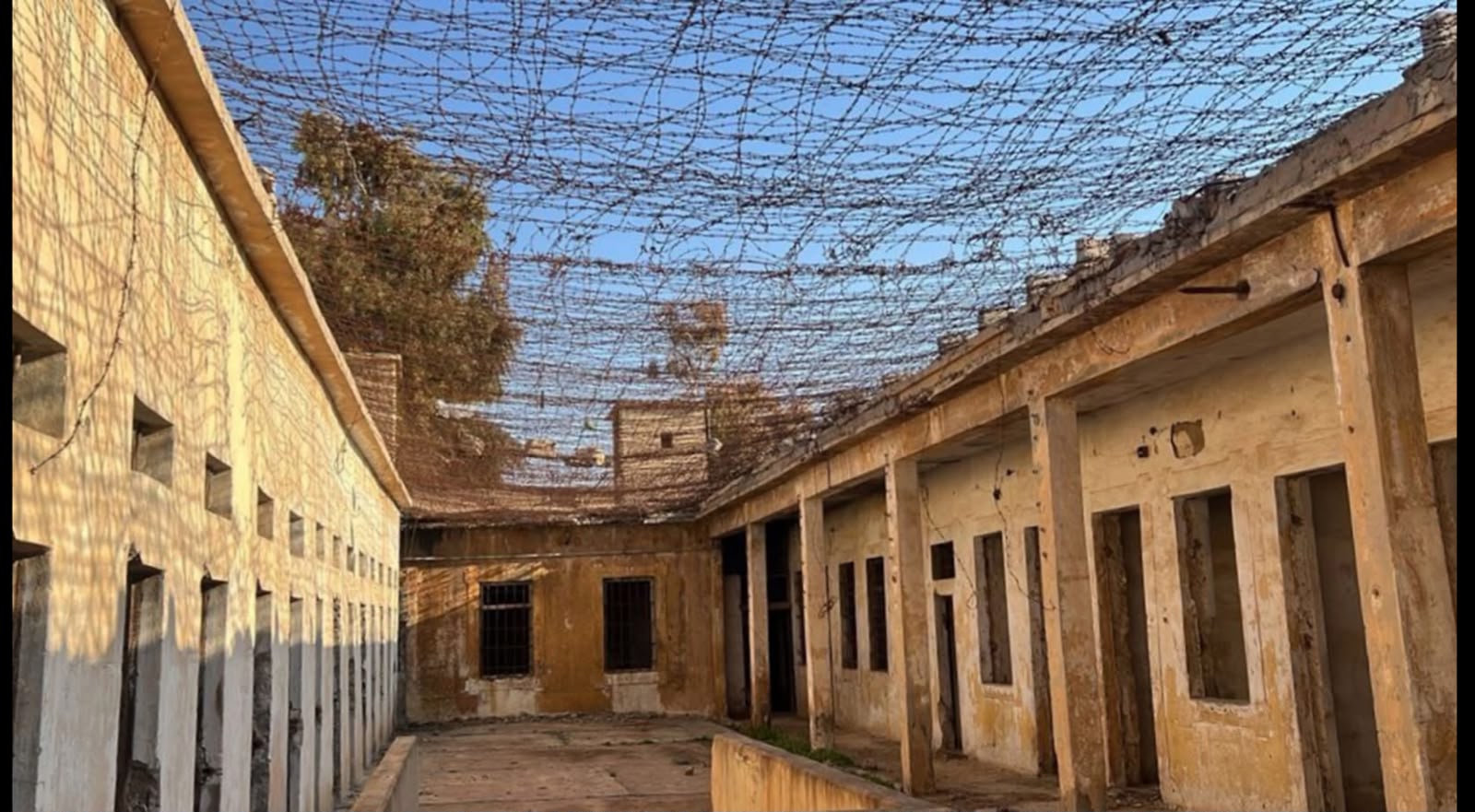
This is why I wrote the novel "The Tunnel": a testimony to one of the most painful chapters of our history, and a document recounting a part of the horror we lived through in Tadmor Prison, that place which became a symbol of repression in the memory of Syrians.
The novel is not merely the story of a prisoner who emerged from behind bars; it is the story of a homeland of long suffering, and the testimony of a generation that lived between fear and hope, between oppression and the determination to survive.
That is why I wrote in its introduction:
"It was my fate to live eight years in the worst prison of the twentieth century..."
And I closed it with these words:
"From the heart of darkness I emerged, like one returning from a long death to a life he had not yet come to know..."
Perhaps the introduction and the conclusion, despite the pages and events that lie between them, converge on a single meaning:
That this novel was not written to recount the experience of a single individual, but to preserve the memory of a homeland.
The executioner tried to possess bodies, but he failed to possess souls. He tried to bury the truth behind walls and wires, but it remained alive in the hearts of the survivors, waiting for someone to tell it to the children and grandchildren.
Thus "The Tunnel" became more than a novel, and more than a personal memoir; it became a testimony to an era of injustice, a call to the future, and a message declaring that freedom may be delayed but never dies, that dignity may be violated for a time but is never defeated, and that peoples who preserve their memory and read their history well are better able to protect their future from falling once again into the darkness of tyranny.
I had sworn that I would recount our tragedy if deliverance and life were granted to me, while I was still behind bars, and so I wrote in a poem titled "I Swore":
I swore, while the shackles bled my wrists,
That I would never soften, as blood still ran in my veins.
Neither the prison frightens me, nor its executioner,
As long as my heart remains filled with manhood.
The whips upon my wounds only kindled
Within me conviction and resolve, time and again…
My blood, flowing from my wounds, inscribed
With its gleam a proud, inspiring verse.
My homeland, your love echoes in my heart,
A pain that torments me and makes me weep blood.
My poetry shall remain beating within my ribs,
Reviving with my groans the deaf and the mute.
It shall shake the throne of tyranny to its foundations
Until it falls before it, surrendering.
Rightly have I devoted this poetry
To truth and to the revolutionaries, that it may speak.
And shape the sighs of the rebels into verses
That resound in the ears of tyrants with discontent.
And I ended that long poem by saying:
And when the clear victory comes, bearing glad tidings,
And Bilal ascends the house to call the prayer in song…
And the statues of the enemy fall and shatter,
And the oppressors weep in regret and remorse,
And they speak the truth after having denied it,
To a noble brother whose way is always to forgive.
And the stubborn shackle on my wrist is broken,
Lifting from my chest a crushing weight.
And abundant poetry bursts forth with my joy,
And my hand takes hold of precious ink.
I shall illuminate what the tyrants hid in our prison,
As long as blood runs in my veins, I shall not conceal it.
Truly, if this blood has become part of me,
It would be shameful not to have sworn it.
This is why I write, and I call on all who have suffered to write as well.
This is why I document.
This is why I bear witness.
For what has been written is not a complaint about the past, but a trust for the future.