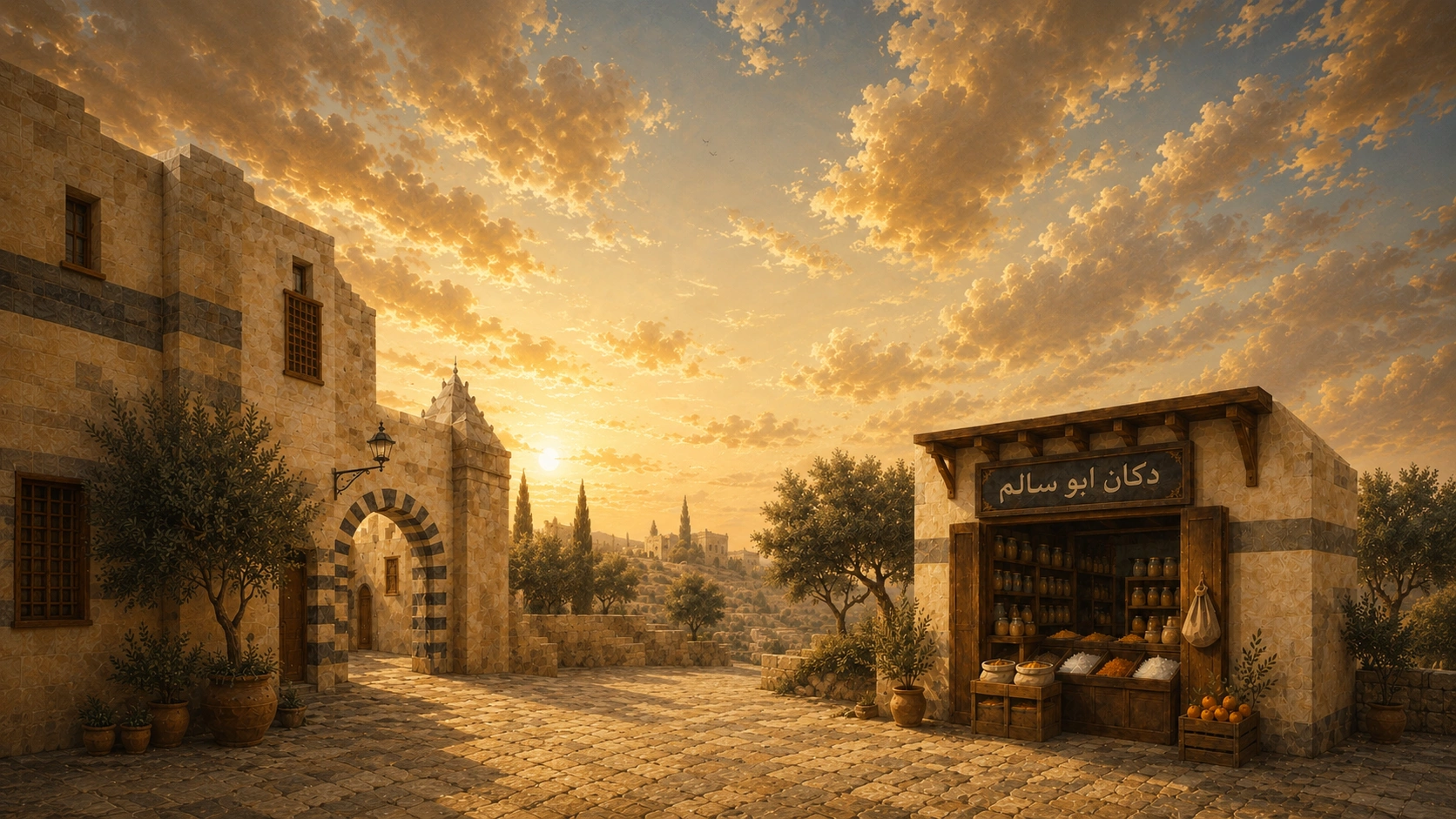
Almost every morning, Abu Salem opens his small shop in the alley the same way: he lifts the metal shutter with a sound the street knows well, sprinkles water in front of the entrance, sets the tins of mate on the left shelf, sugar and oil in the opposite corner, then sits for a few minutes with a hot glass of tea before the day begins.
Abu Salem does not look like a man concerned with the global economy.
He does not follow stock-market bulletins, knows little about energy markets, and has probably never heard of some of the companies that control a large share of international trade. Yet, like any seasoned merchant, he has that strange instinct that lets him sense “the market is uneasy” before he understands why.
A few days ago, a new price list reached him. He stared at it for a while, raised his brows, then said quietly: “It went up again?”
In truth, nothing had changed inside the alley itself.
The street was the same, the customers the same, the same cars passing every day. What had actually changed was happening far, far away from Abu Salem's shop — at sea.
There, in the Strait of Hormuz — the narrow maritime passage through which a vast share of the world's oil and trade flows — tensions were rising again. Global news spoke of possible escalation, shipping companies grew cautious, and energy markets entered a long state of anticipation.
It can seem so far from Damascus that it is hard to imagine any link between it and a tin of mate sitting on a wooden shelf in a small shop. But the modern economy no longer works the way it used to. The world is no longer a set of separate markets; it is a web tightly woven enough that a problem at sea can change the price of goods in places that have never seen the sea.
The paradox is that markets don't wait for a crisis to actually happen. It is enough to be afraid.
This may be one of the strangest truths of the modern economy: many prices rise not because of a real shortage, but because of an expected one. An insurer raises rates fearing escalation, a shipper rethinks its routes, a trader buys cautiously, an importer expects a coming rise and lifts the price before he loses out later.
Suddenly, a whole chain of changes begins — not because a ship has sunk, but because the world has become more afraid.
Fear itself has become part of the market.
And so people sometimes feel prices rise faster than the news. Because the global economy moves at times more by expectation than by reality. It is enough for the market to believe something will happen for everything to start changing.
And Abu Salem, who perhaps could not place the Strait of Hormuz on a map, senses these changes in his own way. He feels them when shipments are delayed, when restocking grows harder, and when customers begin asking the same question every day: “Why is everything getting more expensive?”
The question sounds simple, but the answer is no longer simple at all.
In an older world, the alley consumed what the nearby city produced, and crises took long to cross borders. Today, a small shelf in Abu Salem's shop is tied to the movement of ships, oil prices, energy, insurance, international politics, and even the mood of global markets.
Things are no longer entirely “local.”
Even the mate people drink in their daily mornings — its price can be shaped by the sea, by fear, by political tension, by the rhythm of global trade.
And so the economy is no longer as distant from people as many believe. The economy is not only the numbers on screens, nor the dense reports analysts speak about. The real economy is that feeling that makes Abu Salem say: “Something has changed…” before anyone knows exactly why it has.
Perhaps that is why understanding economics today is close to understanding the world itself. Because the world is no longer as far away as we think — and because a small shop in Damascus can sometimes be moved by a strait thousands of kilometers away.