
"Finding an investor willing to enter Syria is nearly impossible." That is what U.S. envoy Tom Barrack said in his conversation with Becky Anderson at CNN's "Global Perspectives" conference in Doha on October 29, 2026. He was speaking about the difficulty of attracting large-scale investments, especially in energy, where billions of dollars are required and years may pass before any return is realized.
But Syria should not wait for one giant project before its economy begins to recover. The question is: what can be produced now, with an investment that is actually feasible, and that creates jobs and income for people? Agriculture is one answer.
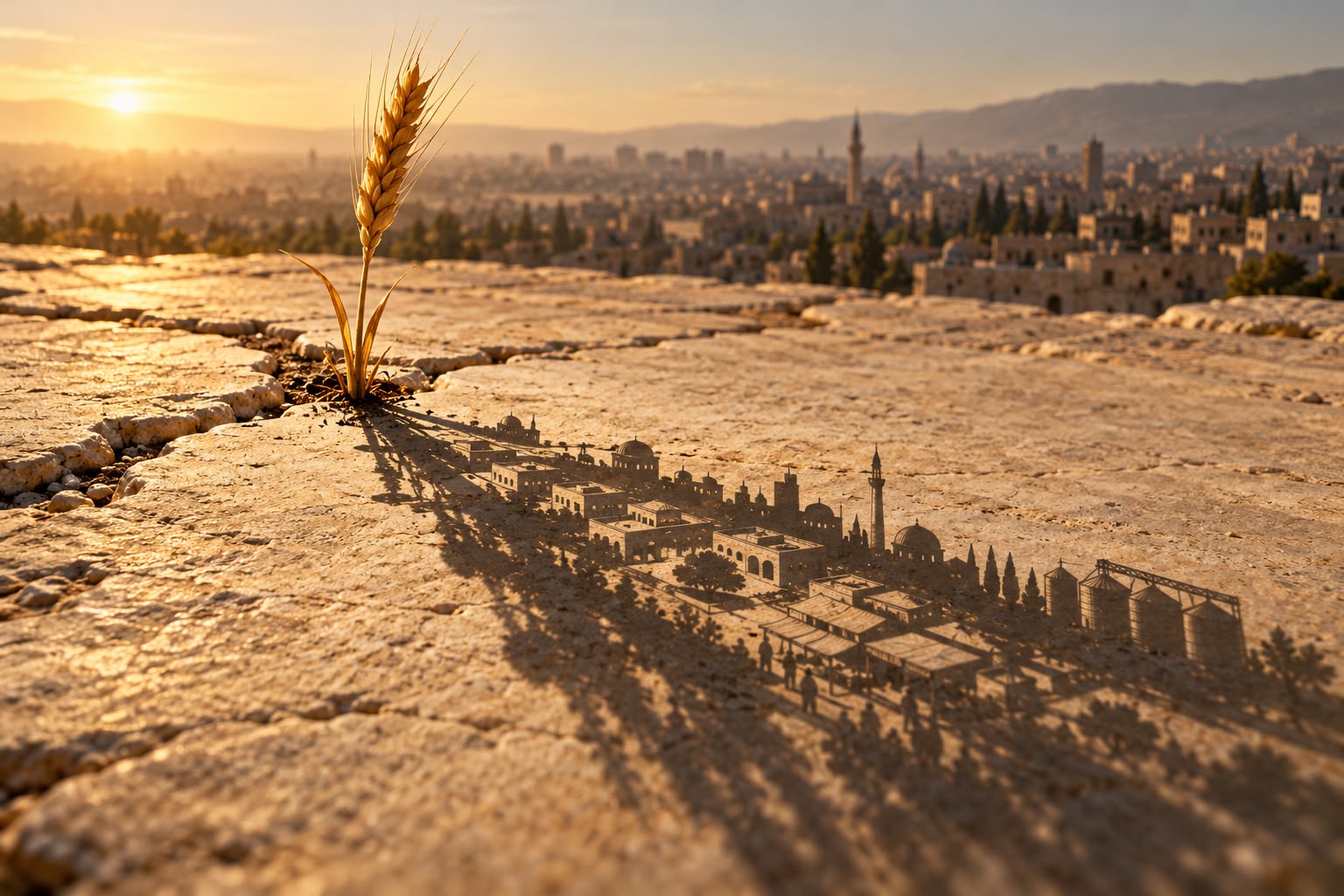
Agriculture is not a substitute for energy or reconstruction. It is a foundation that can connect food security to jobs and industry. The value of a crop does not end at harvest; it grows as it is stored, processed, and brought to market. Each link in that chain opens space for work, from the farm to the factory.
Investments can start with specific, scalable projects: improving irrigation, building storage and cooling facilities, and linking processing to purchase contracts. Some of these projects could generate revenue after the first production seasons, if water, energy, and transport are available, and if there is a buyer. Agriculture is not always guaranteed to be profitable or low-cost; but breaking investment into stages makes the risks clearer and the returns closer.
For these projects to succeed, Syria needs an open market governed by clear rules. The state sets the rules, protects competition, and invests in shared infrastructure; farmers and business owners lead production, investment, processing, and trade. Contracts must remain transparent, and farmers must have access to price information and room to negotiate, so they are not left alone to bear the risks of the season.
An open market does not mean the state abandons food security, nor does it mean leaving producers to face monopolies alone. What is needed is a state that regulates, facilitates, and protects the public interest — without crowding out producers or changing the rules after they have invested.
The government has proposed a direction toward a market-oriented economy, with a role for the state in strategic planning and in protecting food and production security. The challenge now is to implement this balance through rules trusted by investors, farmers, and consumers alike.
The indicators show the scale of the need. The World Bank expects growth to accelerate in 2026, but an improving GDP does not mean households are shielded from food and income pressures. Wheat production recovered after the 2025 drought, yet Syria's grain import needs remain close to the five-year average, while millions of people are expected to need humanitarian assistance in the coming months. A better harvest matters, but it is not enough without storage, processing, and marketing that reduce losses and keep food available to people.
Syria has recovery priorities, a Supreme Council for Economic Development, and a plan to prepare a national agriculture strategy for 2026–2030. What is needed now is to turn these tracks into a clear production agenda: What does each region produce? How does its output reach markets? And where can investment create jobs and local value?
Badr al-Din al-Shallah's book offers an example from the past. It records the varieties and seasons of Damascus apricots, discusses farmland near Qamishli and the cotton and grain crops of the Jazira, and recounts how the qamar al-din (apricot leather) industry moved from manual labor to mechanization. The lesson is not to return to yesterday's economy, but to restore the connection between the land, expertise, trade, and industry.
This connection can be renewed through projects suited to each region's resources, linking farmers to storage and processing facilities and to nearby cities and markets, within Syria and beyond. And with water scarcity, success should be measured by the value and food created per unit of water, not by the size of the crop alone.
Agriculture alone will not rebuild Syria, but it can be the start of a recovery that people can actually feel: steadier food, work in both the countryside and the cities, and income that stays in the regions that produce it. Do not wait for a single investment to change everything. Open the way for a trustworthy market, scalable projects, and an economy that produces from field to market.