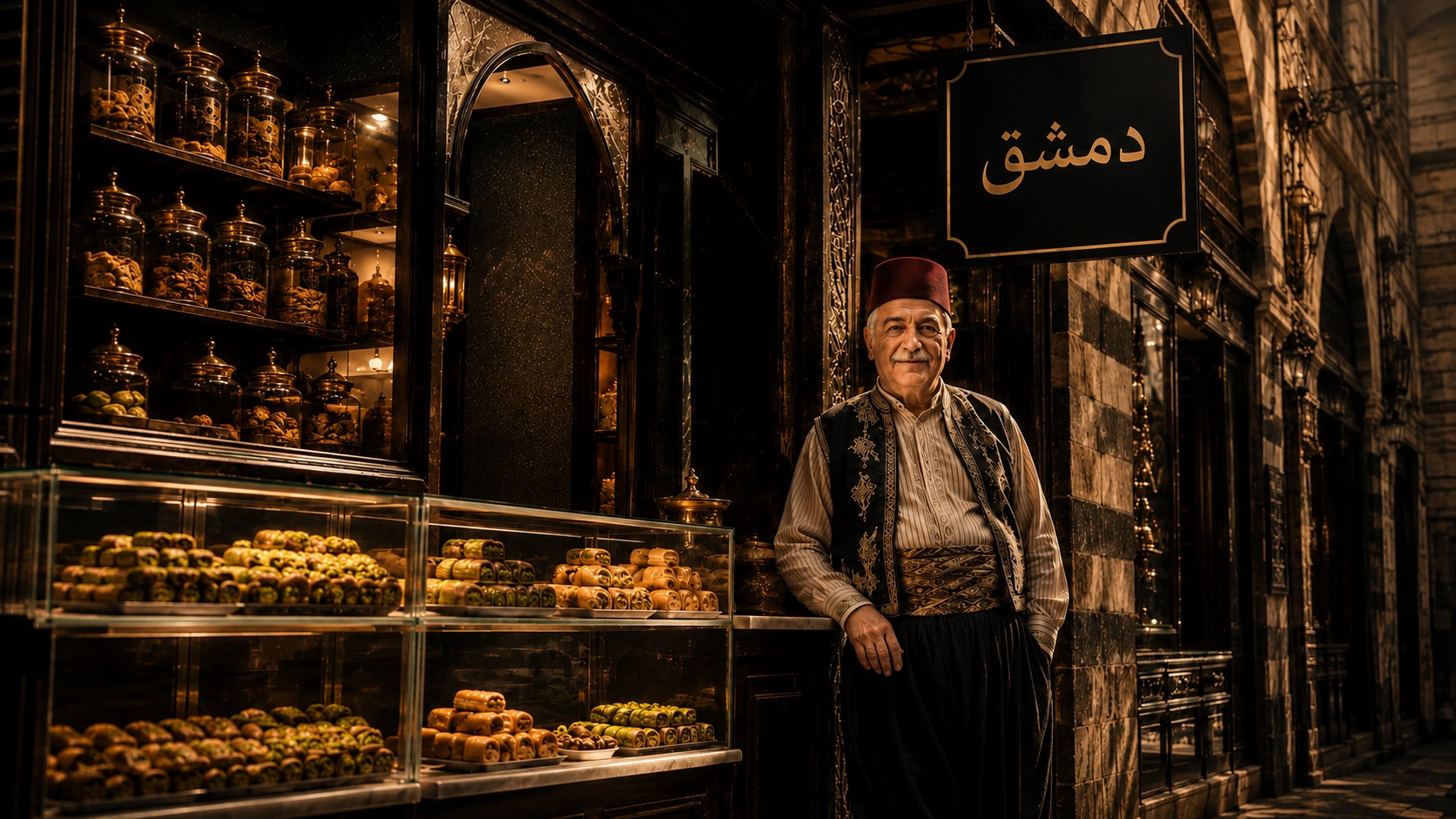
Have you ever noticed that most Damascene sweets have names that sound like terms of affection? Mabroumeh... Madlouqa... Ghoura... If you heard these names outside the context of sweets, you might think someone was flirting with a beautiful girl. They are names filled with softness, affection, and tenderness. You almost feel that the name itself is sweet before the dessert even is. And perhaps that is exactly where the story begins. Maybe it is because the people of Damascus considered the kitchen part of their lives, and because food for them was an act of love before it was simply a meal, and this was reflected even in the language. The names were not merely descriptions... they were part of the story. Sweets were not simply something placed on the table. They were for guests, holidays, occasions, and gifts sent to another home. If food itself carried that much affection, perhaps it is not surprising that its names carried some of it too. It is true that many of these names came from the way the sweets were prepared, but over time their sound was no longer merely descriptive. They began to carry something resembling flirtation and affection. As though the people of Damascus were not satisfied with simply making sweets... they gave them affectionate names too. Or perhaps there is another explanation. Maybe it was because Damascenes were merchants by nature. Even before marketing appeared in the form we know today, they understood that a name was not merely a name. A name is the first impression. The first advertisement. And the first promise. Think about it. Which sounds better? “Baklava rolled with pistachios”... or Mabroumeh? “A sweet soaked in syrup”... or Madlouqa? The second name does not necessarily give you more information about the product, but it gives you more of a feeling. And this is where the value of the name begins. Because Branding, at its core, is not merely a logo, colours, and design. It is the feeling that forms in your mind when you hear the name. The people of Damascus may never have called it Branding, but perhaps they understood this game instinctively. They understood that a beautiful word was part of the experience and that sometimes a name sells before the sweet itself is sold. Imagine a Damascene confectioner standing in his shop hundreds of years ago. He has trays filled with pistachios, ghee, and syrup. He has no Instagram, no sponsored advertisement, and no marketing agency. He has sweets... and he has a name. The name has to stick. It has to be easy to say, easy to remember, and easy to pass from one person to another. “Bring me Mabroumeh.” That sentence alone is enough. You have a Product Name. You have Memory. And you have Word of Mouth. All of that before we even knew these terms existed. Perhaps it was not called Branding at the time. And there was no Marketing Department. But there was something more important: an instinctive understanding of people. An understanding that people do not always buy only what is objectively best... sometimes they buy what feels closer to them. And the name is part of that feeling. Perhaps that is why names such as Mabroumeh, Madlouqa, and Ghoura have remained with us for all these years. They are not merely functional names. They have personality. They carry a feeling before they carry a description. I honestly do not know which of these explanations is correct. Did these names come from the method of preparation? Did they emerge from kitchens filled with affection? Was there a commercial instinct behind them that understood that a beautiful name could sell? Perhaps it was this... perhaps it was that. But I like to believe it was all of them together. That the people of Damascus loved beautiful things, so they gave them beautiful names. That they loved their trade and understood that the name was part of the product’s value. And that they loved their food so much that even the way they described it carried a little affection. Perhaps this is why these names survived. Because they were never merely the names of sweets... they were part of the experience itself. Even today, when you say, “Bring me Mabroumeh,” you are not merely asking for a sweet made from dough, pistachios, ghee, and syrup. You are calling up an entire image. A Damascene shop. A tray of sweets. A cup of coffee. A guest waiting. And a home that knows serving sweets is not simply about serving food... it is a way of saying, “Welcome.” Perhaps this was the most beautiful marketing campaign in the history of Damascus. A campaign that was not written by a marketer and was not created by an advertising agency. It was created by grandmothers, confectioners, and homes that understood that a beautiful name, like a pleasant fragrance, remains in the memory for a long time. And before they added syrup to the sweets... they added a little affection to their names. That is why their names remained sweet... just as their taste did. It seems that the people of Damascus understood this idea... before we invented the word Marketing.
هل اخترع الشوام الهوية البصرية؟
A light exploration of the names of Damascene sweets and how words such as Mabroumeh, Madlouqa, and Ghoura carried emotion, memory, and affection long before the modern concepts of branding and marketing appeared.
Firas Inaya