
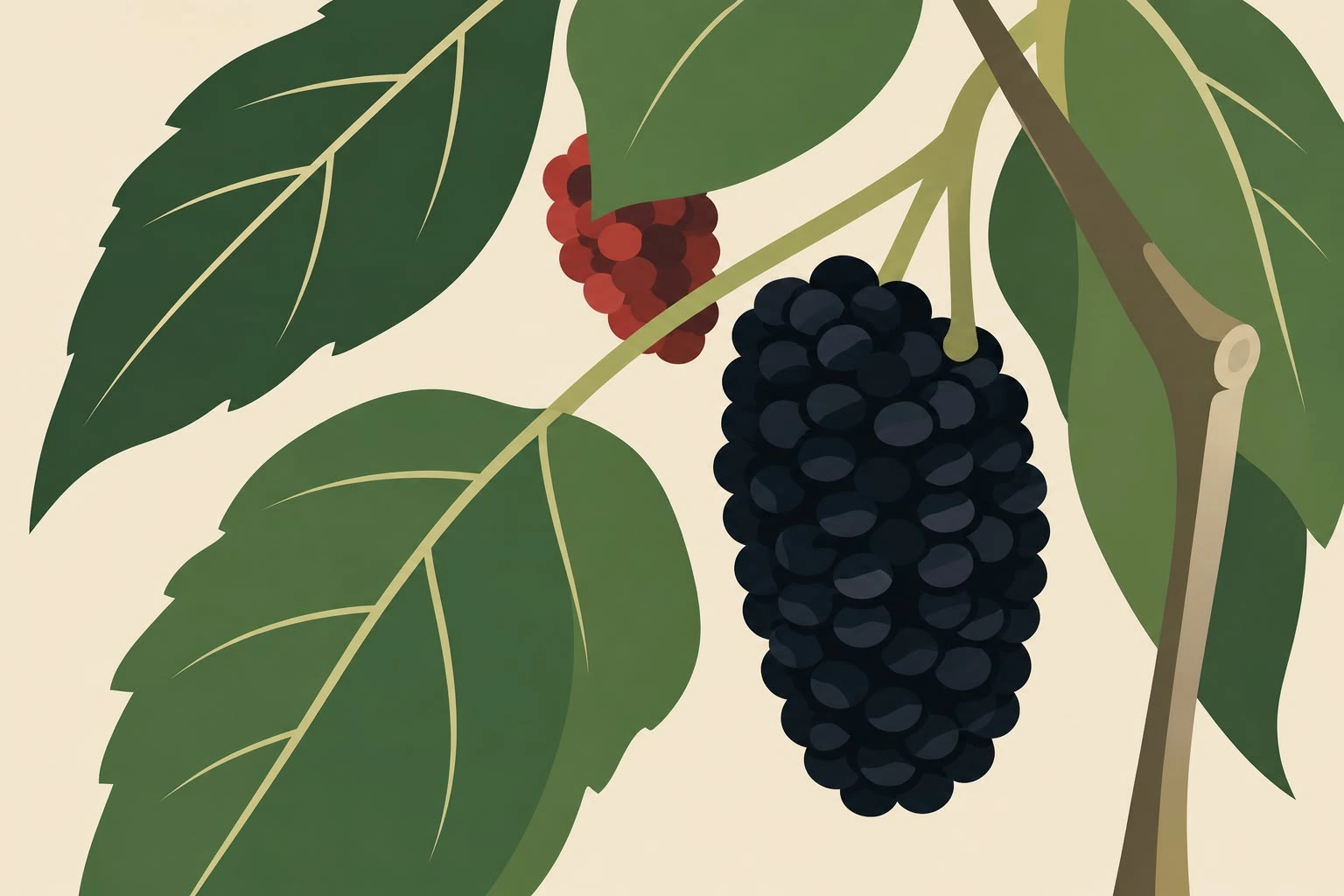
In the old neighborhoods of Damascus, among its ancient houses whose walls are covered with climbing jasmine, the Damascene mulberry tree stands tall, a witness to an extended history and a unique love story between the people of Damascus and their symbols. The Damascene mulberry tree is not merely a fruit-bearing tree. It is part of the city’s visual, cultural, and culinary identity. Under the shade of its broad leaves, beautiful memories were made, and the scent of coffee mixed with the fragrance of jasmine, until it became an essential corner of the old Damascene house.
Beginnings and History: How Did the Damascene Mulberry Become Part of Damascus Homes?
The original homeland of the Damascene mulberry goes back to regions of West Asia, specifically Persia. Yet this tree found in the Ghouta of Damascus and its moderate environment an ideal place to grow for many centuries, until it became rooted in Damascene memory and associated with Damascus itself. The mulberry tree was distinguished by its large size and abundant fruits, whose dark purple color approaches black, and whose delicious taste combines intense sweetness with refreshing acidity. Damascenes loved the mulberry tree and celebrated it until it became a symbol woven into the details of the Damascene house. It decorated the courtyard beside the jasmine and the fountain, rising until it embraced the mashrabiyas and wooden windows.
Damascene Ingenuity: Turning Mulberry into the Master of Summer Juices
Damascenes made use of mulberry fruits and did not limit themselves to eating them fresh. They experimented with extracting their refreshing concentrated juice, which over time became a Damascene craft inherited across generations and carried, through their commercial instinct, to neighboring countries. They also added mulberry to the list of fruits used to make preserves, known as “ma‘qoud,” and learned the secrets of handling this fruit. The berries are pressed gently without breaking their inner seeds in order to avoid bitterness, then the liquid is filtered through a piece of cloth, or gauze, to obtain a juice free of impurities. Sugar is then added, and the mixture is placed over low heat for long hours until it thickens and becomes viscous. This is what is known as mulberry preserve. This intelligent method of dealing with the fruit allowed Syrians to enjoy it for long periods, due to its short season, without the need for costly preservation or refrigeration methods. The preserve also became a companion of Damascene breakfast tables and a light snack between meals, prepared in sandwiches for children and adults.
Mulberry in Popular Culture: A Companion of Joyful Occasions
The taste of Damascene mulberry became associated with family gatherings and generous hospitality, especially in summer, when its flavor mixed with ice runs through the veins and refreshes them. Its beautiful velvety color adds another layer of flavor, making it, in the memory of the people of Damascus in particular and Syria in general, a magical drink that quenches thirst and raises energy and vitality through its natural and added sugar, diluted with water according to preference. The presence of mulberry juice was not limited to homes. It extended to heritage markets such as Souq Al-Hamidiyah and Souq Al-Bzourieh. Its serving by the seller had special rituals: the vendor would wear the traditional Damascene outfit, consisting of a sherwal, tarboosh, and vest, and carry a large copper jug on his back, calling out with his famous phrases describing the drink’s benefits in the summer heat and its effect in cooling thirsty hearts. Mulberry became a companion of joyful occasions such as weddings, graduations, and welcoming pilgrims and expatriates.
The Damascene Mulberry: Nutritional Value and Inherited Medical Benefits
In addition to its unique taste, the Damascene mulberry has many benefits. It is an antioxidant thanks to its dark color rich in anthocyanins, making it resistant to inflammation. It is also friendly to the digestive and respiratory systems, and bitter or not fully ripe mulberry juice is used in folk medicine to treat mouth ulcers and acute throat infections. The Damascene mulberry remains more than just a tree. It is part of the identity and memory of Damascus, a symbol connected to the Damascene house, and its flavor remains present in memory generation after generation.