
Nizar Qabbani mentioned it in his poem Five Letters to My Mother:
"And he hid in his clothes little packets of mint and thyme and a Damascene lilac....."
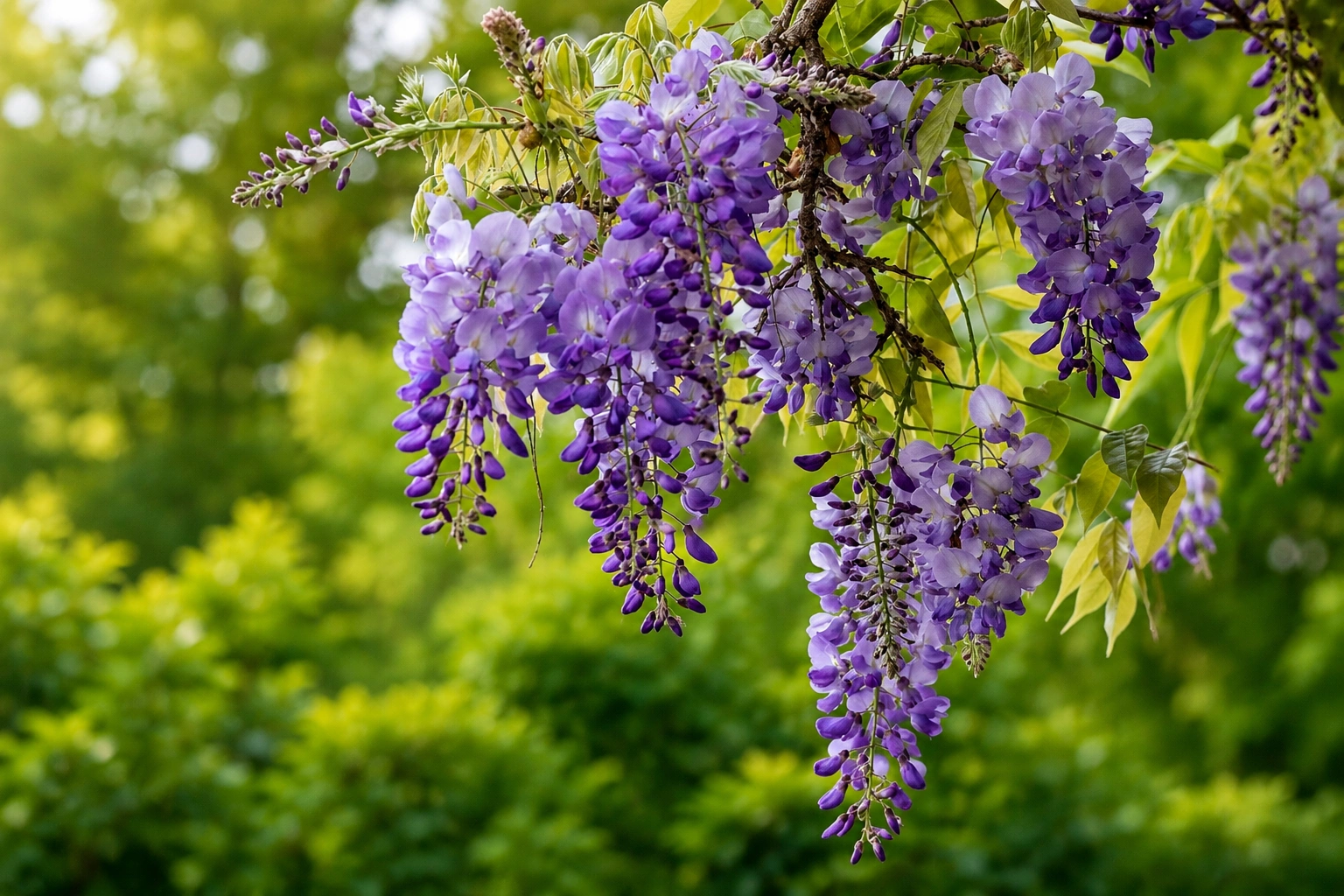
Syrians know it just as they know their own homes, and they wait for it every spring. It begins to bloom at the start of the season, forming clusters that resemble grapevines, with violet flowers and an enchanting aromatic scent.
Al-Lahlaha climbs along walls, which is why most Damascenes used to plant it in the corners of the courtyard, or “Ard Al-Diyar,” and stretch strong ropes for it to climb. As it continued growing upward, its weight would eventually force it to hang down like a waterfall of flower clusters over the courtyard.
Its branches are very thorny, and for that reason it attracted birds of all shapes and colors to nest inside it, from the first bloom at the beginning of spring until the end of the second bloom before the end of summer in August. People would choose an eastern corner for it, so the sun could touch it without harming it.
Al-Lahlaha is not merely a flowering tree in Damascene homes. It is a living presence that exists with the people, rooted in their details and memory, aging with them just like the loquat, bitter orange, and citron trees. In some homes in Damascus, Al-Lahlaha is more than 100 years old and still continues to bloom and bear.
I remember clearly when my grandmother passed away, how Al-Lahlaha seemed to grieve for her and stopped blooming for three years. Even when it bloomed again, the flowering was “half-hearted,” not like before at all. It began to bloom shyly, until my eldest aunt passed away, and after her, the Al-Lahlaha in my grandfather’s house died forever.
The most important detail after all this narration is that Damascenes called it “the Damascene lilac,” although it is not actually lilac at all. Its true scientific name is Wisteria, but the people of Damascus called it the Damascene lilac because of its violet color leaning toward lilac, and also because it is one of the aromatic flowers that fills the place and overpowers every other scent around it.
As for the name “Al-Lahlaha,” it is one of the old popular Damascene names still used by some elderly people in Damascus. It is not a formal Arabic or scientific name, but a purely local inherited heritage name.
One of the most beautiful things that distinguishes Wisteria, which is Al-Lahlaha and the very same Damascene lilac in Damascus, is that it used to be planted in the courtyard near the “Bahra,” the central fountain. When it bloomed at the beginning of spring, the trellises would turn into a ceiling of hanging violet clusters, a scene deeply connected to the memory of many Damascenes in old Arab houses more than any other climbing plant.