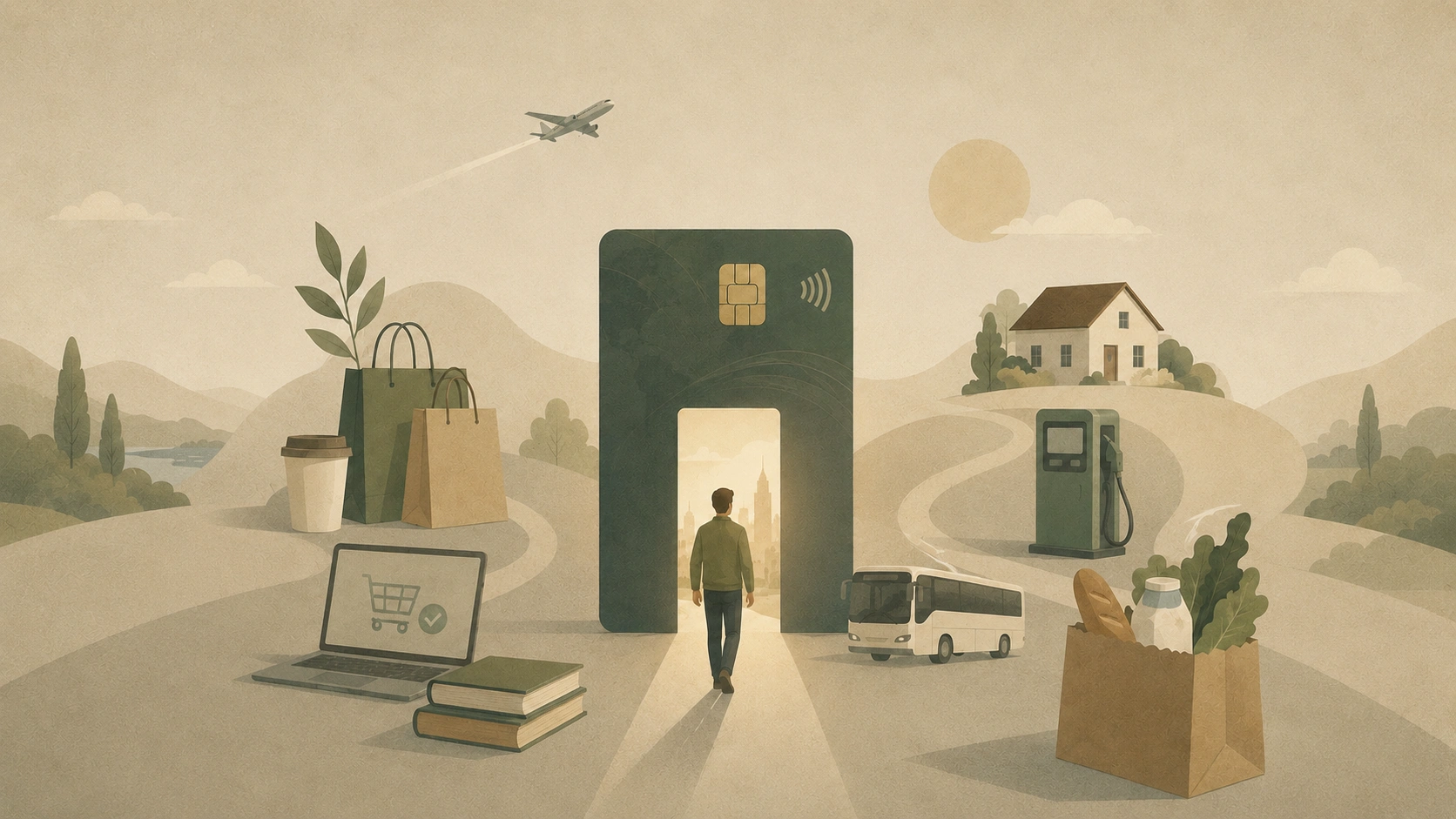
In Syria, news about the activation of an international payment card may sound like an ordinary economic update to some people. But for many others, it feels far bigger than just another banking service.
Because the problem was never really the card itself.
The problem was always that long-standing feeling that the world keeps moving quickly… while you are simply trying to reach it.
Over the past years, Syrians experienced a strange form of modern isolation. Not complete isolation from the internet or technology, but isolation from the “natural ability” to use this world.
To see everything… without being able to fully enter it.
“To see the entire world in front of you… without having a natural way to access it.”
A young man spends years teaching himself programming, only to discover that the simplest tool he needs for work requires a payment method he cannot access.
A student follows free global courses online, but the advanced version she truly needs remains locked behind a “Subscribe” button.
A freelancer works with an international client, then begins a long and exhausting journey simply to figure out how to receive payment.
Over time, the problem stopped being merely financial.
It became psychological too.
A constant feeling that you are operating outside the global system — even if you possess the same skills as everyone else, or perhaps even more.
In a country like Syria, many people learned how to improvise solutions for almost everything: electricity, internet, transportation, work, and even survival itself.
But there is a major difference between improvising temporary solutions… and feeling like a natural part of the world.
This is exactly why global payment services matter.
Not because they are luxury tools, nor because they symbolize “modernity,” but because they have become a basic part of digital life itself.
Today, the global economy no longer moves only through corporations and banks. It moves through subscriptions, digital tools, cloud services, freelancing, online education platforms, and e-commerce.
The modern world is built around one very simple idea:
“To be able to pay… and to be able to access.”
And when this small window finally opens inside a country isolated financially for years, its impact suddenly appears everywhere at once.
A young person can finally buy the tool they need without searching for five middlemen.
A freelancer can work with international clients more naturally.
An entire generation begins entering the digital economy instead of remaining stuck at its margins.
These details may appear ordinary to people living in stable financial systems, but in Syria they carry an entirely different meaning.
Because years of financial isolation never stopped people from learning or trying — they only made the road longer and far more exhausting.
Perhaps the most painful part of the story is that many Syrian talents never needed massive support or extraordinary funding.
They simply needed a normal way to interact with the world.
Something very small…
Something others consider completely ordinary.
Of course, a bank card alone will not fix the Syrian economy, nor solve infrastructure problems or the country’s complex reality.
But sometimes, a small step within the financial system creates more room for movement… and more room for hope too.
Especially in an era where “access” itself has become part of opportunity.
That is why this issue is not really about banks alone. It is about an entire generation trying for years to find its place inside this fast-moving digital world, without remaining behind the glass watching everyone else move forward.
“The story is not just about a bank card… but about the long struggle to feel part of the world.”
Perhaps that is exactly why many Syrians feel these small changes mean far more than they appear to in the news.
Because they do not simply restore people’s ability to pay…
They restore something simpler and deeper:
The feeling that they are still capable of participating in the world… instead of merely watching it from afar.