
On the morning of 26 June 1980, everything in Damascus seemed calm. The trees stood in their places, the clouds drifted across the sky with their usual stillness, and the presidential guard was deployed around the Guest Palace as on any other day. Fate alone was hiding, behind its curtain, a scene that would remain etched in Syria's memory for decades.
Syrian President Hafez al-Assad was due to see off his guest, the Nigerien President Seyni (Hussein) Kountché, who had expressed a wish that Assad found somewhat strange: he had asked to visit the grave of the noble Companion Bilal ibn Rabah al-Habashi, may God be pleased with him, in the Bab al-Saghir cemetery in Damascus. It is said that Assad did not know the grave was there, and it had never occurred to him that a head of state would ask to make such a visit.
Assad went out to bid farewell to his African guest, and no sooner had he reached the gate of the Guest Palace than a surprise was waiting for him.
Three young men from Aleppo, doing their compulsory military service in the Presidential Protocol Department, had planned, in coordination with members of the Fighting Vanguard, to assassinate Assad. They were:
Mahmoud Mouna.
Mahmoud Darwish.
Abdul Rahman Qabbawa.
These three young men were among the few Sunnis in the Presidential Protocol Department, and they carried in their chests something heavier than rifles and grenades. They carried the anger of a bleeding homeland, memories of homes raided by fear, of mothers waiting for their sons at prison gates, and of the voices of minarets trembling over cities worn down by hardship.
They did not see themselves as mere soldiers in the Presidential Protocol Department, but as sons of a generation caught between two fires: the fire of what it saw around it, and the fire of the helplessness and oppression it carried in its heart.
The days passed slowly and heavily, until pain accumulated in their souls the way black clouds gather before a storm.
These young men felt like strangers in the place where they served, besieged by mockery, suspicion and accusation, punished for holding on to their religious rites, and forced to listen to words of ridicule that lodged in the soul like thorns.
They deeply resented the treatment they received from some of the sectarian officers in charge of them. What pained them most was hearing religion and religious rites mocked, and the obscene language some of their comrades flaunted in front of them, they who had been raised on faith and virtue. All this bred in them a sense of injustice, contempt and marginalisation.
The officer in charge would punish them whenever he suspected that they were keeping up their prayers or observing their religious rites.
It is said that one day during the month of Ramadan, after a soldier informed on Abdul Rahman Qabbawa for fasting, the officer tied him bare-chested to a post under the scorching sun and stopped him from breaking his fast at sunset, in a scene where cruelty mingled with mockery of fasting and of religion.
Some of their comrades also routinely called them "reactionaries" and attacked their families in Aleppo, the rebellious city that was then living through tension and confrontation with the authorities.
The bloody events that Aleppo and other Syrian cities had witnessed over the previous two years, together with the insults and personal harassment these young men endured during their military service, led them to think of getting rid of the man they saw as the head of the sectarian regime and the one chiefly responsible for what was happening.
These young men were in contact with Mohammad Kamal al-Tabbaa, a young member of the Fighting Vanguard from the Sheikh Maqsoud neighbourhood of Aleppo. In the house of his father, known as Abu Omar al-Tabbaa, al-Tabbaa was sheltering two men wanted by the regime: his cousin Mahmoud Barghal, and Muthanna Abdul Wahid, one of the leaders of the Fighting Vanguard and the official in charge of the Suleiman al-Halabi sector.
These three (Muthanna, Mahmoud Barghal and Kamal) took charge, in Aleppo, of planning the operation and coordinating its execution with the three young men serving in the Presidential Protocol.
On the day of the operation, Assad was standing at the gate of the Guest Palace among his guards and aides, deluded by his might and reassured by the security measures around him.
Suddenly an explosion shattered the stillness of the place. Smoke mixed with blood, hopes mixed with fates, and great dreams collided with a harsh reality whose end no one could know.
Mahmoud Darwish threw a hand grenade towards him, but Assad managed to push it away with a quick kick. Moments later, Abdul Rahman Qabbawa threw another grenade, and Assad pushed one of his aides onto it; it exploded beneath him and killed him instantly. Assad's personal bodyguard, the Palestinian Major General Khaled al-Hussein, threw himself on top of Assad.
At that moment Mahmoud Mouna and his two comrades opened fire with their machine guns on the president and his aides.
When the assailants saw Assad lying on the ground, drenched in his own blood and motionless, they believed the mission had succeeded: the page had been turned, history had changed course in those few seconds, and the man who had left Syria reeling for years was finished.
They withdrew quickly and vanished into the streets and neighbourhoods, while all of Damascus went into an unprecedented state of alert.
It is said that the Fighting Vanguard in Aleppo and in Damascus were coordinating, and that the Damascus group's task was to confirm the tyrant's death. That group was led by Abdul Hamid al-Damour from the town of Kafranbel in Jabal al-Zawiya, along with Mohammad Zaitouni and Mahmoud al-Jarban.
But Assad was not dead.
He was taken to hospital screaming with rage, hurling the foulest insults, threatening and vowing revenge, covered in blood. It later emerged that he had suffered several injuries, none of them serious, but they left deep scars on his sense of divinity and his megalomania.
And so Assad survived the most dangerous attempt on his life since he came to power.
That survival was the beginning of a new and even harsher chapter.
The very next day, the sounds of revenge echoed across the country, and a new phase of escalation and violence began. The most prominent and most horrific of those events was the Tadmor Prison massacre, committed at dawn on 27 June 1980 by members of the Defence Companies on the orders of Rifaat al-Assad, in which a thousand political detainees were killed.
About two weeks later, on 7 July 1980 to be precise, Law No. 49 was passed, which the regime used to finish off the Islamists and execute its opponents.
As for the three young men who carried out the operation, their gruelling journey of pursuit, hiding and being hunted had begun. It took them nearly ten days to reach Aleppo, because of the tightened security and the many checkpoints and patrols along the roads. When they arrived, a shock awaited them. They did not find the doors they had left behind, but homes wrapped in silence, families led away into the unknown, mothers who did not know where their sons were, and children for whom fear had become the first thing life taught them.
For in Assad's Syria, it is not only the one who opposes who is punished; the whole family enters the ordeal of detention, dread and waiting. Mothers counted the days as prisoners count the bars of their cells, fathers grew old before their time, and homes filled with questions that found no answer.
The authorities arrested every member of their families and relatives: fathers and mothers, brothers and sisters, uncles and aunts, and even children.
They herded them all to a prison run by the Fourth Division near the Artillery School in Aleppo.
The detainees were subjected to various forms of torture, humiliation and mistreatment. The women, children and elderly were released after about two months, while most of the relatives were freed after four months and ten days.
As for the three young men, every security branch was mobilised to hunt them down, under the direct supervision of the head of the regime.
Mahmoud Darwish was the first of the assailants to be arrested. State Security agents captured him after an informant gave him away while he was hiding at a friend's home in the al-Tilal area of Aleppo.
Abdul Rahman Qabbawa chose to fight to the very last moment. After months of pursuit and tracking, he was surrounded along with one of his brothers near the Public Garden in Saadallah al-Jabiri Square in central Aleppo. When Abdul Rahman realised he had walked into an ambush, at the corner of the Public Garden on the post office side, he opened fire first. A fierce gun battle followed, ending in his death and his brother's. The guide who had led the agents to them was also killed (one of the Vanguard's young men who had weakened and collaborated with security in the hope of a pardon), and a number of intelligence agents were killed or wounded.
And so Abdul Rahman's body fell in the streets of the Aleppo he loved, but he left behind broken hearts, a bereaved mother, and family and comrades with nothing left but memories.
As for Mahmoud Mouna, his story was like a long journey between pursuit, hope and pain, and it lasted more than a year. He took part in several operations inside Aleppo, until his name became known throughout the city. Assad personally followed news of him every day, pressing the security branches to capture him quickly, dead or alive, until an agent lured him to the town of Anadan on the pretext of buying weapons. There the agent slipped a drug into a glass of laban, and he was arrested unconscious.
Mahmoud Mouna was subjected to severe and brutal torture at the Military Security branch in Aleppo, run by the "Pharaoh of Aleppo", Mustafa al-Tajer. He was then transferred to Damascus after Assad asked to see him in person. It is said that Assad stared at him for a long time in heavy silence, a silence in which anger mingled with astonishment, before finally bursting out with a few curt words: "Take him away from me." Mahmoud, meanwhile, stood before him steadfast, showing no sign of having been broken.
They were only a few moments, but they weighed more than years.
A strange encounter between a man who held all power and a shackled man who had nothing but his faith and his steadfastness.
The scene ended with a few curt words. The prisoner was returned to the Military Investigation Branch, then later moved to Tadmor Prison, where he met his Lord on the gallows in the Sixth Courtyard in 1982.
Mahmoud left this world, but his name lived on in the memory of his comrades, his family and those who loved him.
Thus ended the attempt that nearly changed the course of events in Syria. The man who was targeted survived, while the country entered a new phase of escalation and violence, and the ordeal of Syrians grew harsher and wider, as if those bullets that failed to end the conflict had heralded a longer chapter of pain, blood and fear, too heavy for Syrian memory to carry easily.
The ironies of history often seem cruel. Some blows meant to end an entire era can, when they fail, lead to the exact opposite: they inflame the conflict further and open new doors of tragedy and suffering. And then it is not only the warring sides who pay the price, but an entire nation, a nation exhausted by tragedy whose effects still echo in its memory to this day.
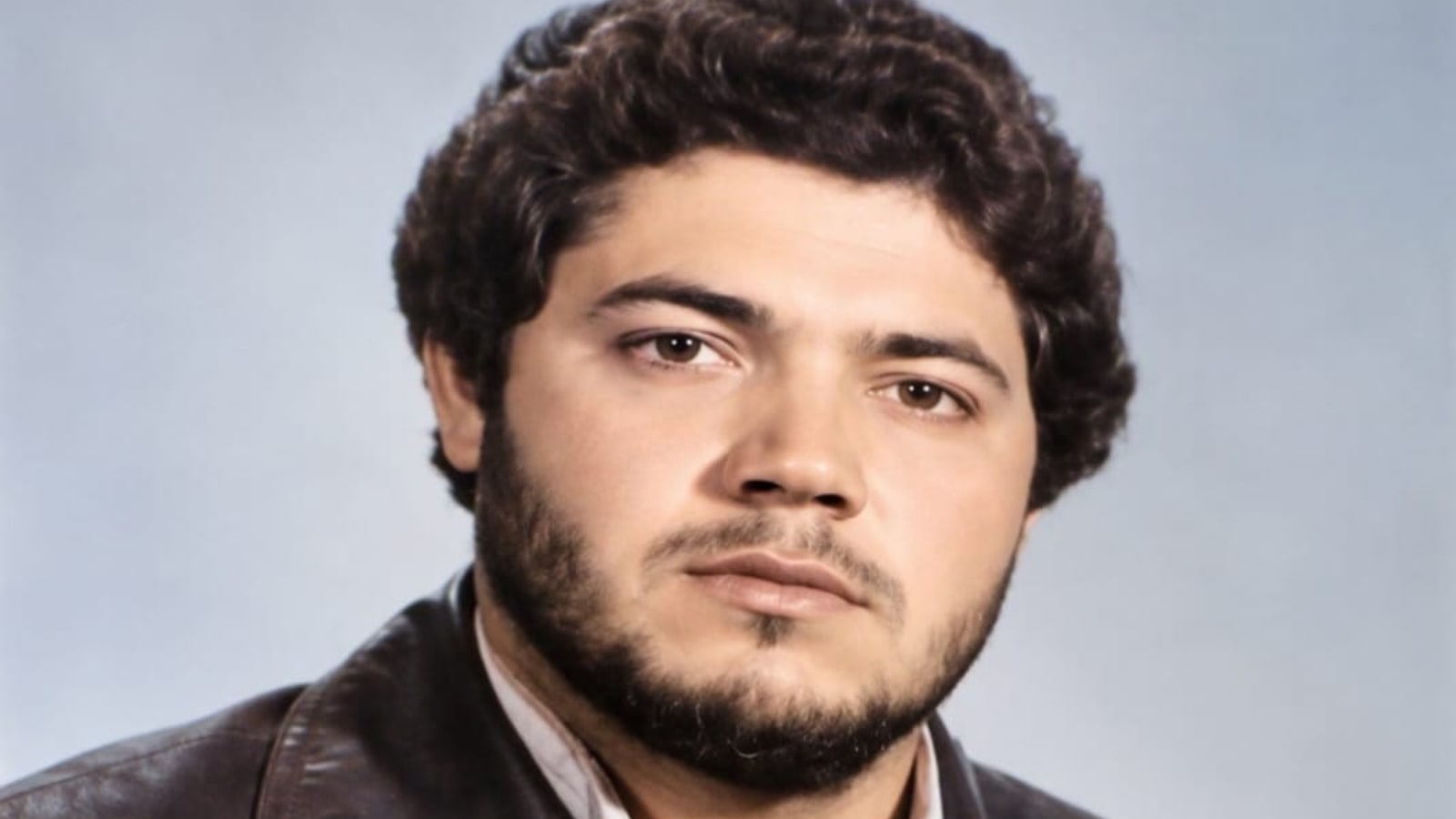
The attached photo shows the young Mahmoud Mouna, who stood before Assad under his hateful, searching gaze, steadfast and unbroken.