He would lift the shutter of his old shop every morning and repeat the same phrase:
“Glory be to the One who distributes رزق and never forgets anyone from His grace.”
It was never merely a habit. It was a deep certainty filled with contentment. His face carried what Damascenes call a “merciful face” — the kind that instantly makes you feel warmth and familiarity.His white beard resembled a spring morning in Damascus, carrying within it calmness and hope.
“Some faces do not feel like people… they feel like warm places.”
A Small Paradise Beside the Umayyad Mosque
In Al-Nawfara Alley, attached to the shadow of the Umayyad Mosque, where the smell of coffee mixes with the voice of the Hakawati storyteller and the footsteps of worshippers leaving prayer… he built his paradise there. Inside a space no larger than two meters, he knew Damascus fruits the way fathers know their children.
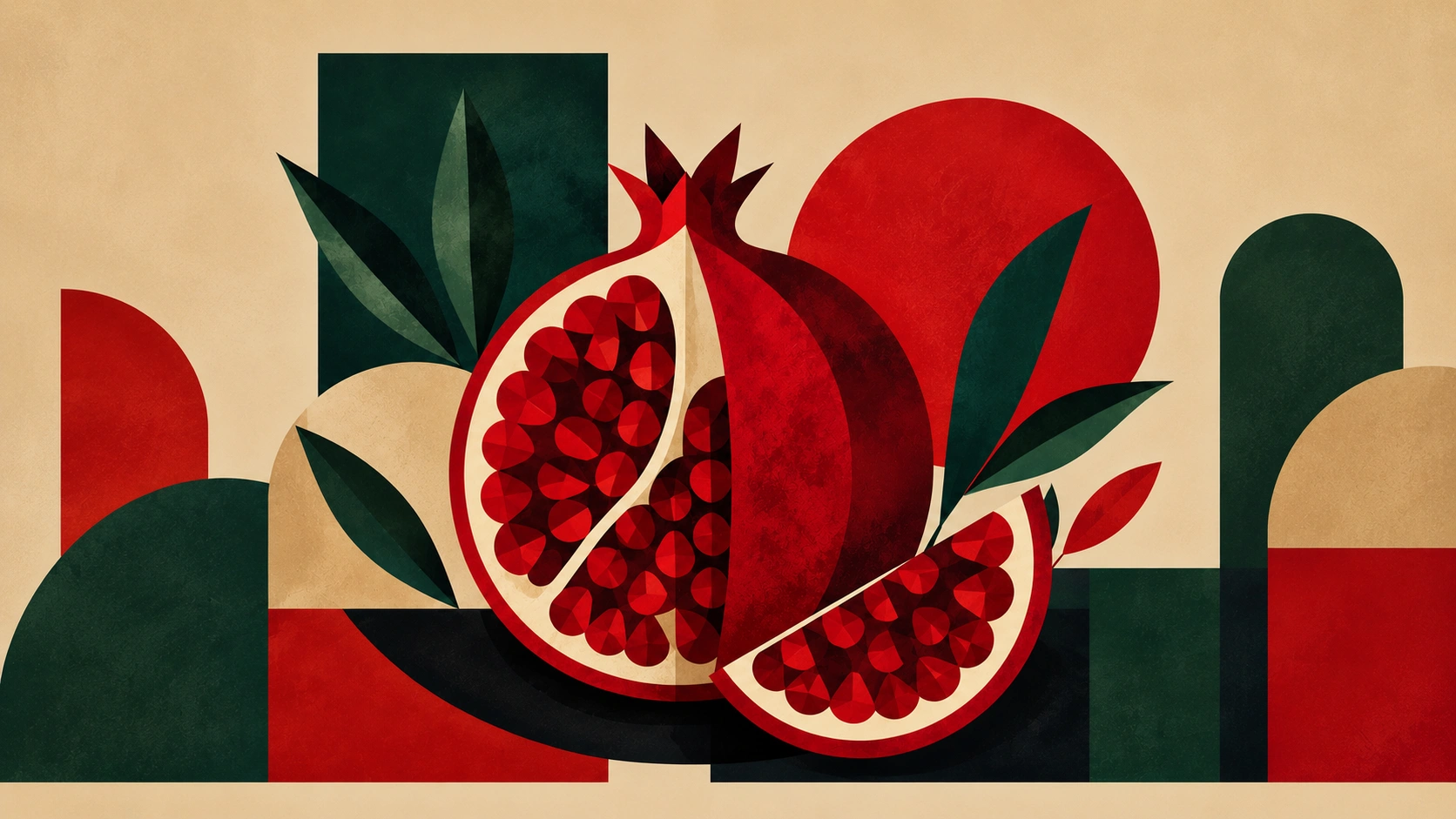
He knew their birth, their youth, and their aging seasons. The pomegranates in his hands looked like paintings:
Seeds tightly arranged like fields of scarlet poppies, with no pale emptiness and no color stronger than that glowing crimson red.
And the tiny Mawardi oranges, scented with musk, felt like perfume spreading through the old alleys.
“Rosewater and pomegranate… one family of colors creating a flavor too complex to describe.”
He never measured ingredients, nor weighed flavors. Feeling alone guided him.And the cup of juice in his hands resembled Damascus itself: simple in appearance… profound in effect.
When Winter Becomes a Ritual
With the passing of pomegranate season, when trees finally allow their leaves to fall… the paradise would change. A large pot filled the shop with steam and fragrance.
Fennel and anise seeds challenged the cold alleyways, while hot sahlab topped with coconut invited you to warm your bones before your hands. Just as he mastered joy in summer through pomegranate and rosewater… he mastered it in winter through things simpler and deeper. And this was exactly what Damascus had taught him, just as it taught all its people:
“Joy does not require much.”
Sometimes it is only cactus fruit during a soft summer night. Or a plate of sprouted fava beans with salt and cumin during a freezing winter evening.
The City That Creates Joy from Small Things
Damascus is simple… like the colors of wooden clogs and sweets scattered along its streets. And deep…
like its ability to create musky apricots and Mawardi oranges. That is why the man’s shop was never merely a juice stand. It was an extension of an entire city’s memory.
A place where the scent of seasons, the sounds of alleyways, and the stories of ordinary people quietly preserved the spirit of the Levant without anyone ever writing their names into history books.
“Damascus does not live only inside its ancient buildings… but inside the people who resemble it.”
One Final Image
In the end, the entire text feels like an attempt to preserve a single image.The image of a man who stood for years behind a juice cooler… inside his tiny paradise that somehow resembled his beautiful face.
“Sometimes, the most beautiful thing we keep from people… is the way we remember them.”