
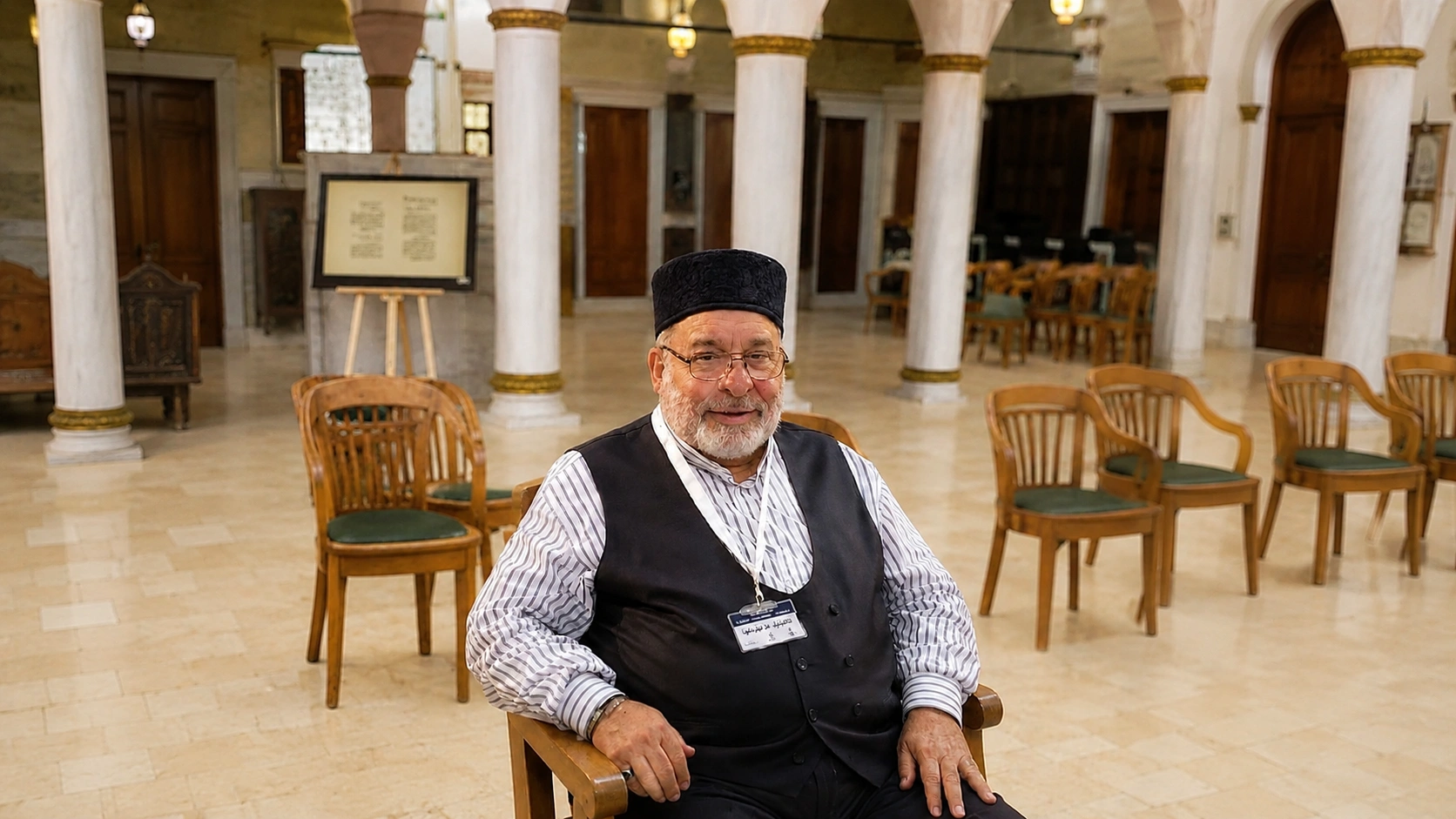
With the passing of Sheikh Muhammad Masoud Khayata, Aleppo loses one of the voices long intertwined with its spiritual and musical memory, and one of the most prominent figures in religious chanting and the Aleppo muwashshah in recent decades.
The Sheikh passed away in Istanbul at the age of seventy-five, after a long life dedicated to serving Sufi chanting, preserving Aleppo's musical heritage, and passing this legacy down through generations in a time when cities have changed rapidly and many of the old voices that once defined the spirit of the city have disappeared.
Sheikh Muhammad Masoud Khayata hailed from a distinguished scholarly family in Aleppo. He was the son of Sheikh Muhammad Najib Khayata, one of the city's leading scholars of Quranic readings and Arabic language, renowned for his scholarly stature as a master reciter, a scholar of jurisprudence, Quranic recitation, and linguistics, and the author of prominent works on Quranic readings and the rules of recitation.
Sheikh Muhammad Masoud Khayata grew up in an environment where knowledge and spirituality intertwined. From childhood, he was influenced by gatherings for remembrance, recitation, and chanting, before apprenticing under the leading chanters and sheikhs of Aleppo. Over the years, he became one of the most important voices associated with Sufi chanting and the authentic musical heritage of Aleppo.
For decades, the Sheikh's name was linked to the Hilaliyya Zawiya in Aleppo, one of the city's oldest Sufi lodges, which for centuries served as a center for circles of remembrance, spiritual listening, and religious chanting. There, he assumed the leadership of the chanters, preserving the traditions of ancient practices and the styles of remembrance and chanting for which the lodge was known.
Sheikh Muhammad Masoud Khayata was not merely a performer of chants and litanies; he was a guardian of this rare oral heritage and one of the voices that recognized early on the danger of this art disappearing with the changing generations and the rapid pace of cultural transformations. Therefore, he dedicated a significant part of his life to teaching young chanters, imparting to them the fundamentals of the muwashshah and ancient forms as he had received them from his early sheikhs. In 2006, with Aleppo being chosen as the Capital of Islamic Culture, Sheikh [Name] founded the "Aleppo Heritage Ensemble," which included a select group of the city's leading singers. Its aim was to document Aleppo's rich musical heritage, revive its ancient muwashahat and chants, and present them both within Syria and internationally as an integral part of Aleppo's cultural identity.
During its years of activity, the ensemble presented works and performances that contributed to showcasing Aleppo's musical and spiritual heritage, at a time when the city still held its position as one of the most important centers of tarab (classical Arabic music), muwashahat, and qudud in the Arab world.
The Sheikh also left behind a significant intellectual legacy through his book:
"The Chosen Pearl in the Art of Reciting Dhikr," in which he explored the origins of dhikr, Sufi chanting, and muwashahat in the Levant, documenting the schools of performance, methods of listening, and rituals associated with this ancient spiritual art.
While residing in Istanbul, he contributed to the establishment of the House of Muwashahat, through which he documented many ancient works, muwashahat, and qudud.
With his passing today, Syria loses one of the guardians of its heritage and a custodian of its auditory memory. Cities don't only lose their sons; sometimes they lose their voices as well.
The legacy of Sheikh Muhammad Masoud Khayata will remain present in his students, in every gathering for remembrance, in every Aleppo muwashshah still sung with authenticity, and in that warm, Aleppo voice that carried the city's memory.