I do not know when these rituals disappeared from our lives.
They vanished quietly, the way beautiful things usually do — without farewell, without a final announcement.
Yet whenever I see fava beans or peas in the market, the image of my grandfather’s old mud-brick house returns to me, carrying with it sounds, scents, and scenes that still live inside memory as if they happened yesterday.
As children, the season of fava beans and peas was never just an agricultural season.
And for us, it had nothing to do with what adults called “mouneh” — the yearly food storage tradition.
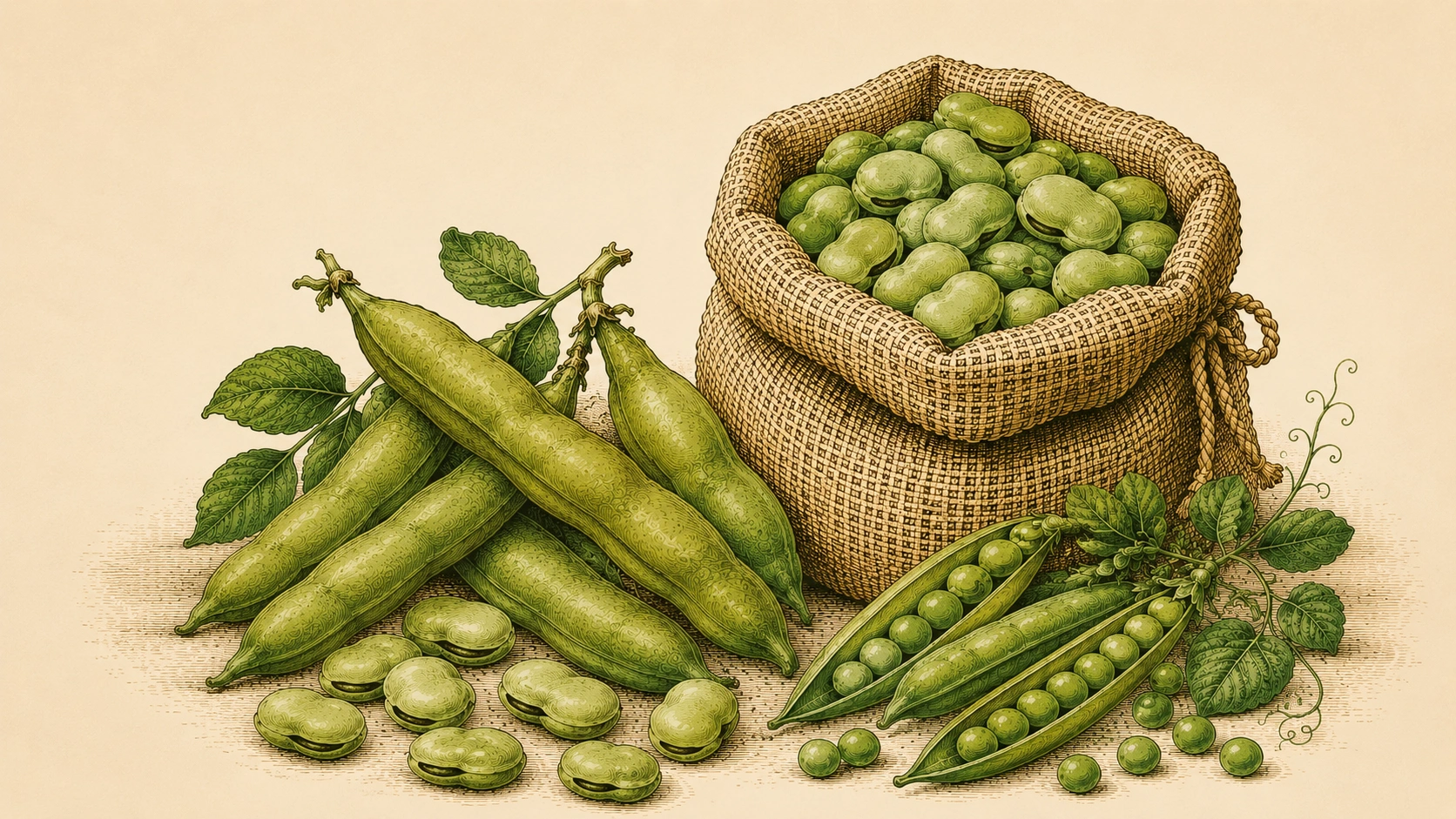
We waited for the arrival of the large burlap sacks the same way children wait for Eid.
The truck would stop in front of the house, and the men would begin unloading sacks overflowing with green peas and fava beans, transforming the courtyard into something resembling an annual carnival.
“Some seasons did not bring food alone… they brought people closer to one another.”
The entire family participated.
Grandmothers, mothers, aunts, cousins — and sometimes even neighbors.
Circles of people sat around piles of fresh green vegetables, hands working endlessly while conversations, laughter, old stories, and cups of tea flowed between them.
No one felt they were doing exhausting work.
Everyone was living a complete social occasion.
As for us children, we had our own world.
We competed to open the green pods, secretly hiding some beans to eat away from the eyes of adults.
And my grandmother — or “Meemti,” as we lovingly called her — would watch us from afar before shouting in her warm yet firm voice:
“Don’t eat raw fava beans… they poison the blood!”
We had no idea what “blood poisoning” meant, but it sounded terrifying enough to make us stop for a few minutes before secretly stealing green beans once again.
Those days carried entire rituals with them.
The scent of damp straw.
The sound of pods cracking between fingers.
Plates of food suddenly appearing to feed the small army working in the courtyard.
The laughter of women echoing to the end of the neighborhood.
Even the sunlight seemed different during those days, as if it too were participating in the celebration.
“The houses filled with laughter… long before the freezers filled with mouneh.”
Today, I can buy frozen, peeled peas or fava beans in just minutes.
Everything has become faster, easier, and more practical.
But something was lost along the way.
The true value was never in the beans themselves.
Nor in the peas.
Nor even in the mouneh stored for long months.
The value was in the people gathered around them.
Mouneh was a beautiful excuse for families to come together.
It was an occasion where memories were made alongside preserved food.
The conversations shared above piles of fava beans lasted longer than the beans themselves.
The peas disappeared after months, but the laughter remained suspended in memory for decades.
Sometimes I think what we truly miss today is not the things themselves, but the rituals surrounding them.
Life once overflowed with small occasions that gathered people together without formal invitations, calendars, or WhatsApp groups.
The arrival of fava bean season alone was enough for the entire village to know that beautiful days had begun.
“Some memories remain greener than time itself.”
And perhaps that is why, when I remember those stacked burlap sacks in my grandfather’s house, I do not remember the beans or peas as much as I remember the faces.
Faces of people who are gone.
Voices no longer heard.
Days far simpler than we ever realized at the time.
It truly was a carnival.
A carnival of love, laughter, collective work, and family warmth.
And some of those fava beans still trapped inside memory… remain greener than anything we see today.