In many discussions about Syria’s post-conflict phase, the conversation is often reduced to one question:
“How do we create jobs?”
But despite its importance, that question is no longer enough.
The real challenge today is not simply providing work opportunities, but redefining the model itself: how work is understood, practiced, and transformed from a response to exceptional circumstances into the foundation of a stable economic and institutional future.
When “Figure It Out Yourself” Becomes a Culture, Not a Skill
In Syria, it does not take long before hearing the country’s most common phrase:
“Figure it out yourself.”
It appears everywhere — at work, in government offices, and throughout everyday life.
Over time, it evolved from a casual expression into an entire philosophy for approaching work and dealing with challenges.
Throughout years of war and displacement, work for many Syrians became closely tied to rapid adaptability, accomplishing tasks with limited resources, and overcoming the absence of clear systems and procedures.
In such environments, personal flexibility becomes a substitute for organization, and work is managed through improvisation and immediate solutions more than through stable systems and structured workflows.
And this is not dysfunction.
It is a natural response to instability.
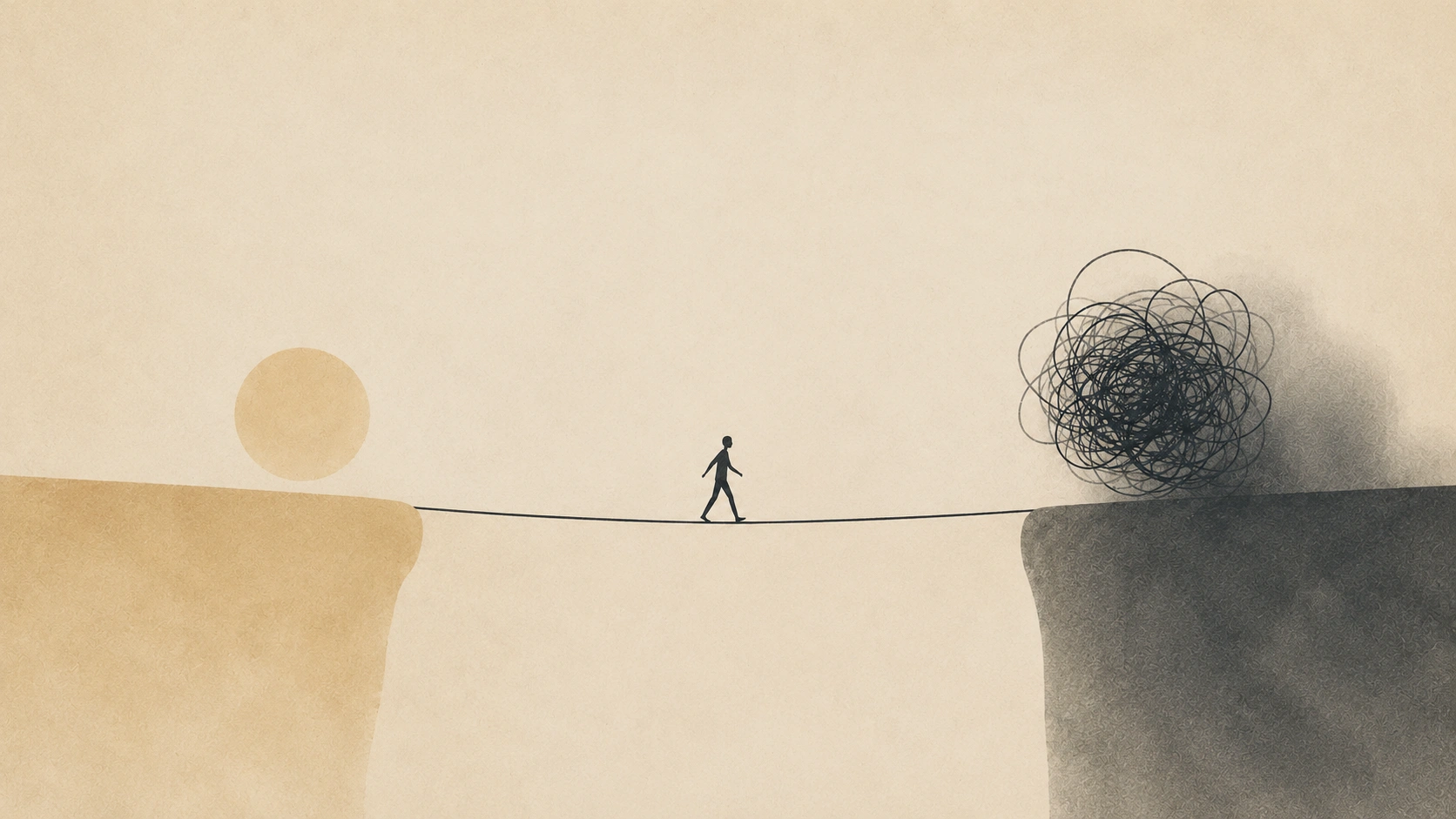
But the real problem begins when the tools designed for survival continue governing environments that are supposed to move toward stability.
“What helps people survive emergencies… is not always enough to build stable futures.”
When achievement becomes tied more to individuals than to processes, and when temporary fixes replace repeatable systems, institutional development slowly gives way to the logic of daily reaction.
Knowledge and expertise become trapped inside individuals instead of transforming into shared institutional assets.
The Logic of the “Instant Expert” vs. the Logic of Long-Term Building
In periods of uncertainty and pressure, the person capable of immediate execution is often seen as the ideal worker.
But stable economies and institutions are not built this way.
Real development depends not only on speed, but on the ability to generate cumulative knowledge, improve practices over time, and create systems that can evolve and be repeated.
The issue is not quick solutions themselves.
The issue is turning them into the only accepted model of work.
At that point, the question:
“How do we improve the system?”
is replaced by a far more urgent one:
“How do we solve this immediately?”
This mindset may appear practical in the short term, but over time it weakens institutions’ ability to learn, grow, and sustain themselves.
Starting Where Others Left Off
An essential part of rebuilding work culture lies in abandoning the illusion of starting from zero every single time.
Progress does not come from reinventing everything repeatedly.
It comes from cumulative learning, benefiting from previous experiences, and respecting knowledge as a shared resource that evolves across generations rather than disappearing with individuals.
The societies and institutions that truly advance are not the ones constantly restarting.
They are the ones capable of continuing the work where others stopped.
“Strong institutions are not built only on exceptional individuals… but on the knowledge that remains after them.”
Toward a More Mature Definition of Work
The next phase does not require more people capable of achieving results despite impossible circumstances.
It requires people capable of building systems that continue functioning even after they leave.
This difference between the achiever and the builder may become one of the defining factors determining whether Syria truly rebuilds itself… or merely reproduces fragility in new forms.
And this transformation begins with simple questions inside every institution and every team:
Will our current workflow survive if our most experienced people leave?
Do we reward those who build systems… or only those who extinguish fires?
Does knowledge accumulate inside tools and processes… or remain trapped inside individuals?
Syria does not only need jobs.
It also needs to redefine the very way work itself is understood.
Because the transition from survival to building is not merely an economic transformation.
It is a transformation in mentality, culture, and ways of thinking.
“And perhaps that is exactly where real recovery begins.”