
Last summer, I was sitting in one of the Gulf’s luxury hotels. The hotel was stunning by every standard: exceptional service, world-class restaurants, and breathtaking design.
But what caught my attention was not the hotel itself.
It was the families.
Families from across the Gulf region had come searching for comfort, privacy, security, and a place where they could simply be themselves — without needing to adapt to another culture or apologize for their values.
And in that moment, a simple question came to my mind:
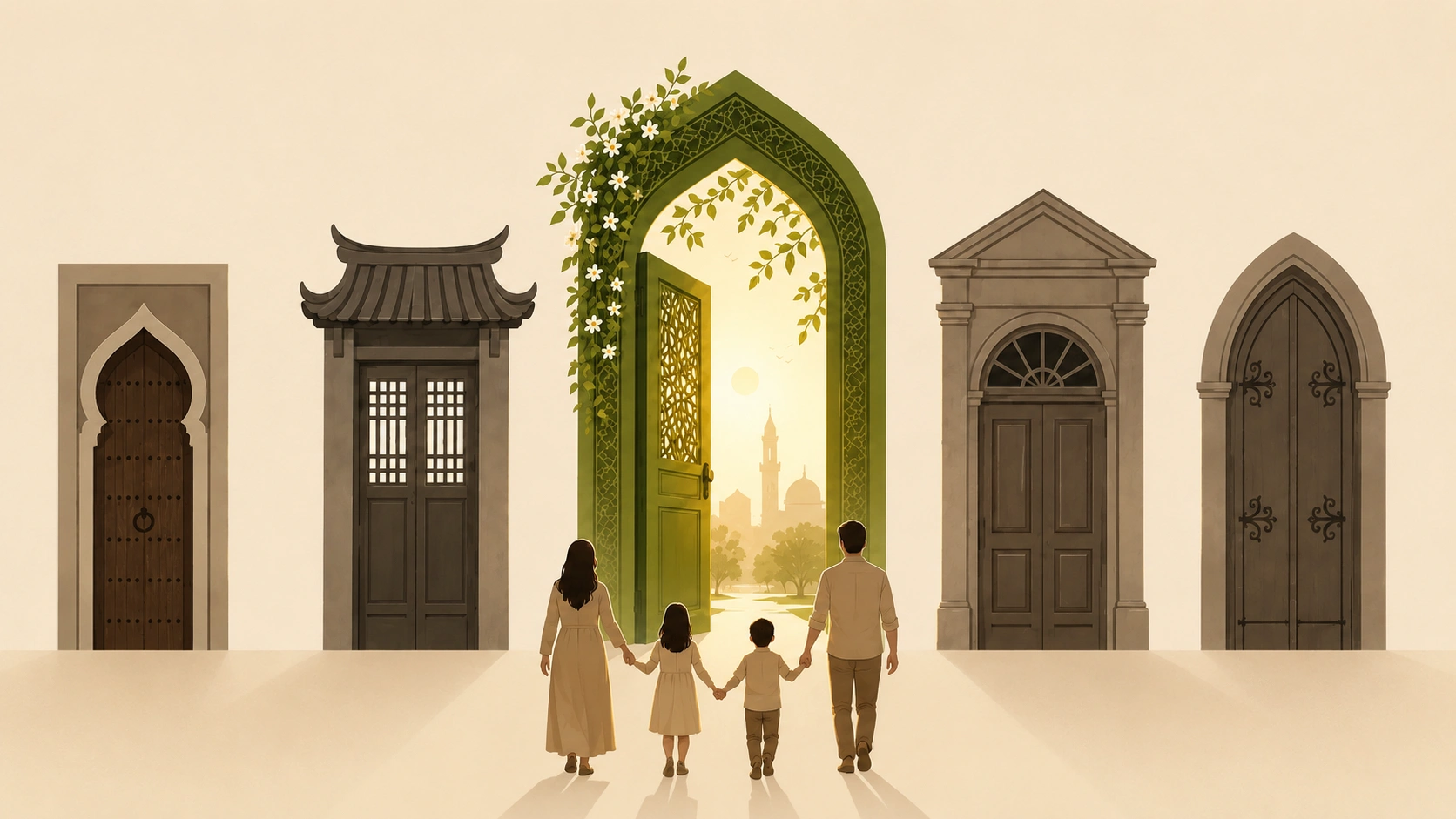
Why shouldn’t Syria be the natural destination for these families?
Not because we have more beautiful beaches or bigger hotels.
But because we possess something deeper.
We resemble them.
And this is exactly why I believe the conversation about the future of tourism in Syria needs to be reframed.
Every time we talk about developing the tourism sector, the discussion quickly turns toward the number of hotels that need to be built, the scale of investments required, and the projects that could be launched — as though the main problem is merely a shortage of buildings.
But the truth is that Syria does not primarily need more hotels.
It needs a bigger idea.
It needs a clear answer to one simple question: Who is the visitor we want to attract to Syria?
In my opinion, there is a strategic opportunity that has not yet been properly invested in.
Millions of Arab and Muslim families travel every year searching for destinations that provide comfort, quality, privacy, and a sense of harmony with the surrounding environment. These families are not only looking for luxury; they are looking for places where their values are understood and respected, and where their presence feels natural rather than exceptional.
And in a world where tourist destinations are becoming increasingly similar, identity becomes a competitive advantage.
Syria possesses one of the strongest tourism identities in the region, yet it has not transformed that identity into a fully integrated project.
We have a history that cannot be reduced to an archaeological site or tourist attraction. We have Damascus, the capital of the Umayyad state, still present in the Islamic imagination from Jakarta to Casablanca. We have the Umayyad Mosque, the old markets of Damascus, Aleppo with its ancient history, the shrine of خالد بن الوليد in Homs, and hundreds of places tied to a shared civilizational and spiritual memory across the Arab and Islamic world.
But I am not speaking here about religious tourism in its traditional sense.
I am speaking about a broader vision.
A vision that positions Syria as the primary destination for Arab and Muslim families — not only because it contains important historical and religious landmarks, but because it offers a complete experience built around understanding the needs of those families.
What if part of our tourism investments were designed around this idea?
What if we created world-class family resorts along the Syrian coast that considered family privacy from the very beginning of the design process?
What if family spaces, children’s facilities, and women-oriented services became essential elements of national hospitality standards?
What if we could provide families with the level of service found in the world’s finest destinations, but within an environment closer to their culture and values?
This is not an ideological argument, nor a call for only one model of tourism.
It is simply a realistic reading of the market.
Successful tourism is not built on trying to attract everyone in the same way, but on understanding the segments in which a country holds a genuine advantage.
And I believe Syria possesses an advantage that is difficult to replicate.
We do not need to invent a new identity or import a tourism model from abroad. What we need is smart investment in what we already possess.
But identity alone is not enough.
And here lies our greatest responsibility.
We cannot ask visitors to come for history alone. They must also find modern airports, good roads, advanced digital services, hotels that meet international standards, and a hospitality experience that turns a first visit into the beginning of a long relationship with the country.
And why shouldn’t Syrian cuisine compete globally?
We possess one of the richest culinary traditions in the region, with cooking cultures deeply rooted in Syrian cities for centuries. There is no reason why a Syrian restaurant cannot become a global destination in itself, or why Syrian names should not one day appear among the world’s highest international rankings.
National ambition is measured not only by what we possess today, but by what we believe we can achieve tomorrow.
And I believe the greatest mistake we could make is to place identity in opposition to development, or tradition in opposition to quality.
Successful global experiences prove the exact opposite.
The more confident a nation is in its identity, the more capable it becomes of transforming that identity into economic value.
That is why I believe the future of Syrian tourism does not lie merely in building more hotels.
It lies in building a clear idea about the place Syria wants to occupy on the regional tourism map.
As for me, I believe its natural place is to become the destination people choose because they seek quality — and return to because they found something increasingly rare in today’s world:
A sense of belonging.
To feel, even while far from home, that you are still among your own people.
This is not merely a vision for tourism.
It is a vision for Syria itself.
A Syria confident in its identity, open to the world, and capable of transforming its history into a starting point for the future — rather than merely a memory of the past.