In the depths of Syrian pain, stories are born that transcend the limits of human endurance.
Stories in which family names become symbols of sacrifice.
Such is the story of the respected Al-Abbasi family — a Damascene family whose life unfolded into a deeply human tragedy filled with tears, grief, patience, and shattered hope, reflecting the suffering of an entire people.
This painful journey begins with Sheikh Eid Al-Abbasi, one of the prominent students of the renowned scholar Sheikh Nasir الدين Al-Albani.
Sheikh Eid was arrested in the early 1980s (1980) during the rule of Hafez al-Assad.
Like many others at the time, his “crime” was engaging in religious teaching, preaching, and Islamic education outside the strict frameworks imposed by the regime.
Years of Darkness (1980–1993)
Sheikh Eid Al-Abbasi spent nearly thirteen continuous years imprisoned unjustly without fair trial.
During those years, he moved through some of Syria’s most feared political prisons, enduring isolation, physical and psychological torture, and complete separation from his family and children — including his daughter Rania, who spent her childhood and adolescence growing up without her father.
His absence was never ordinary.
It became an open wound inside the family.
His children grew older while his face slowly transformed into a distant memory that visited them only in dreams.
“Some absences never become memories… they remain open wounds inside a family forever.”
Freedom and Return to Knowledge
Sheikh Eid regained his freedom in 1993.
Despite the scars prison left upon his body and soul, he emerged with patience, faith, and gratitude.
He immediately returned to his scholarly mission, dedicating himself to writing, researching, teaching, and editing works of Islamic jurisprudence and Hadith.
The Greater Tragedy
Yet his release was not the end of the Al-Abbasi family’s suffering.
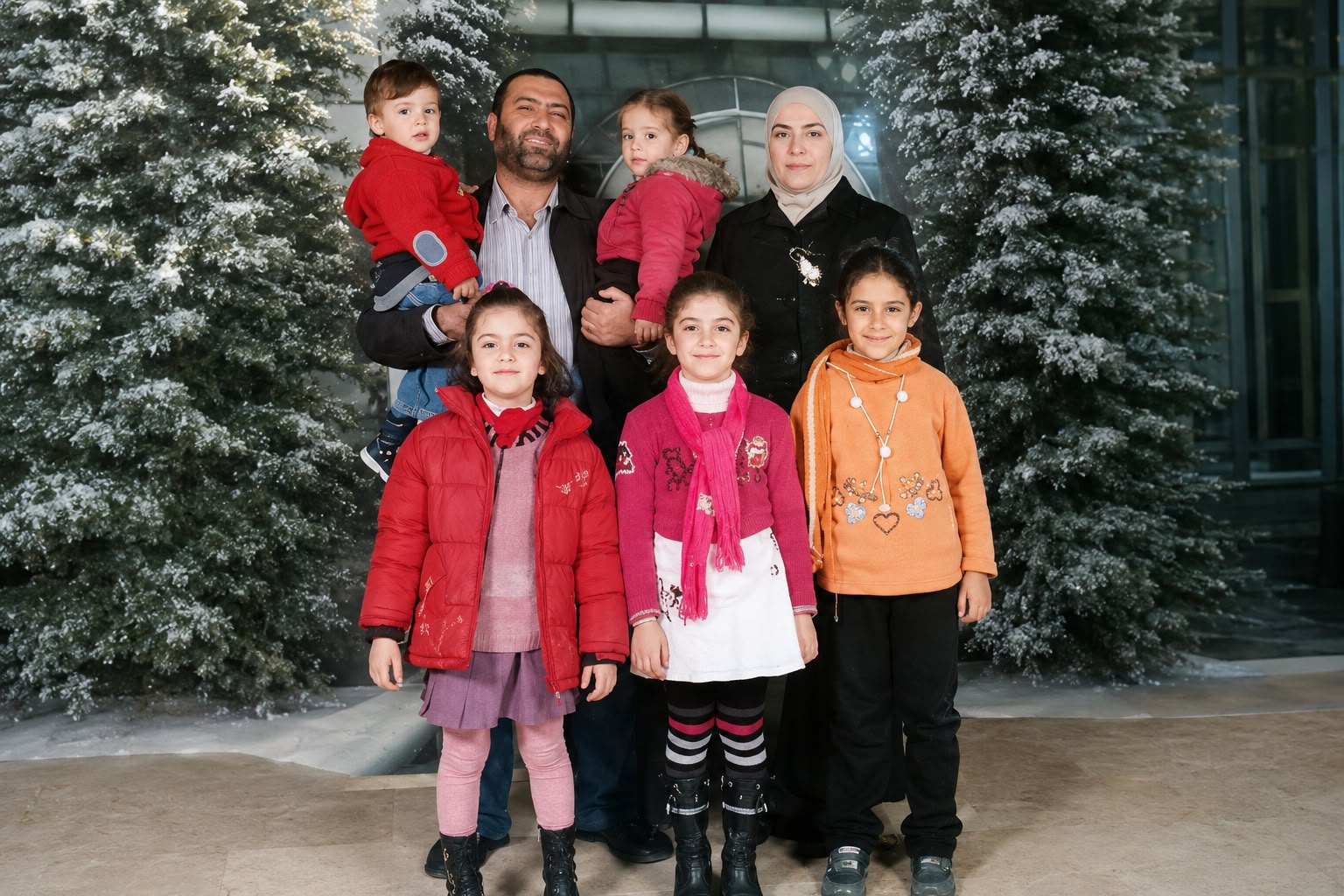
Human rights advocates and those close to the family believe that the arrest of his daughter Dr. Rania Al-Abbasi, her husband, and their six children in 2013 was linked indirectly to the political history of their father.
Sheikh Eid lived long enough to witness tragedy repeating itself through the blood of his grandchildren.
It became a pain that consumed the remainder of his years.
In a devastating development, investigations and official findings by Syria’s National Commission for Missing Persons revealed evidence and video recordings confirming the killing of Dr. Rania’s six children and their father by regime forces.
Her brother, Hassan Al-Abbasi, confirmed reviewing horrifying classified footage preserved out of respect for the victims’ dignity.
In one recording, a camera moves through a dark room filled with the bodies of children, while the perpetrator Amjad Youssef coldly states:
“The children of the major financiers in Rukn al-Din… a sacrifice for the soul of martyr Naeem Youssef.”
(Naeem was Amjad’s brother who died during battles.)
The statement revealed that the killings were driven by revenge and blind sectarian hatred.
Thus, the story of Sheikh Eid Al-Abbasi became a living embodiment of a Syrian exile stretching across two generations:
Beginning with the imprisonment of the father, and ending with the disappearance and murder of the daughter, her husband, and their children.
Naela Al-Abbasi… The Other Face of the Story
On the other side of this tragedy stands Dr. Naela Al-Abbasi, Sheikh Eid’s second daughter, a consultant in obstetrics and gynecology based in Riyadh.
A doctor whose humanitarian mission brought life into the world, helping deliver thousands of children and bringing joy to countless mothers.
And here emerges the story’s most painful contradiction:
While Naela devoted her life to helping children safely enter this world, forces of darkness were stealing the lives of her sister’s six children and depriving them of sunlight itself.
Today, Dr. Naela’s voice has transformed from congratulating mothers on newborns into appeals addressed to international institutions and human rights organizations.
She no longer searches for ways to welcome life.
She searches for answers about the fate of her sister’s children who were killed by a brutal regime and its agents.
And so Naela remains a living witness to her family’s wound — and a voice refusing to let the story of Al-Abbasi disappear into silence.
“In Syria, some families did not only lose loved ones… they entered a lifelong battle against forgetting itself.”
O Allah, grant patience and steadfastness to Sheikh Eid and the Al-Abbasi family.
Mend their broken hearts with mercy worthy of Your generosity.
Grant them the reward promised to the patient, whose recompense is beyond measure.
Fill their hearts with peace and compensate them with mercy and relief in this life and the next.