Years ago, I was sitting with a non-Syrian friend. While we were talking about Arab cities, he suddenly asked me:
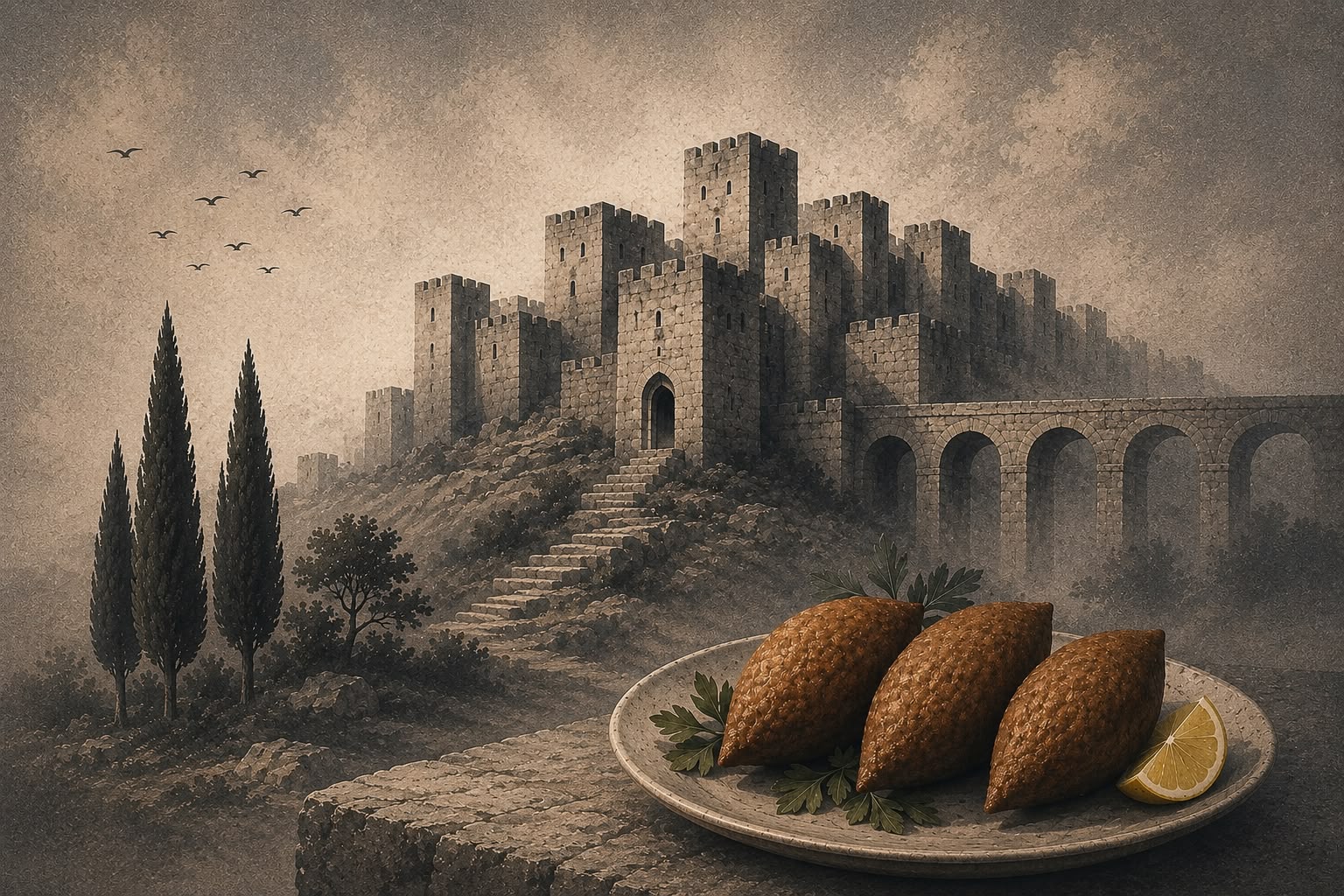
“Aleppo? Isn’t that the city where people speak funny and eat kibbeh all the time?”
I laughed that day. But something inside me broke.
Not because he insulted Aleppo, but because he was repeating an image that had managed to define the city more successfully than the real city itself.
Aleppo was liberated. From six decades of Ba’athist and Assadist rule: yes. But no, Aleppo was not truly liberated.
It was never liberated from the stereotype.
The image of kibbeh and grilled meat on the ring road. The heavy dialect used as material for jokes. The “funny Aleppian” whose only role in television dramas is to entertain others.
And perhaps most painfully, this image is no longer promoted only by outsiders. Some of Aleppo’s own people now reproduce it daily themselves, as though abandoning it would mean betraying the city.
Spend only a few minutes on social media and you will understand exactly what I mean.
Hundreds of clips, accounts, and posts reducing a city thousands of years old into a few repetitive clichés:
Kibbeh. Barbecue. Dialect. Jokes. And sometimes unbearable superficiality.
This image did not emerge accidentally. It was built through decades of television comedy, drama, and entertainment culture. And sadly, some of those who helped reinforce it were artists and entertainers from Aleppo itself.
The same image still sold and consumed every day online under captions like:
“This is how Aleppians are.”
“This is Aleppo culture.”
“Funny Aleppo moments.”
But the real question is: Why?
Why is one of history’s greatest cities reduced to this? Why is a city that stood for centuries as one of the world’s most important commercial, cultural, and industrial centers reduced to food, accents, and jokes? And why do some of its own people insist on presenting it this way?
People of Aleppo…
Aleppo is not a joke. Aleppo is not a dialect. And Aleppo is not merely a plate of kibbeh, no matter how magnificent it may be.
Aleppo is an entire civilizational idea.
A city that produced merchants who reached the farthest corners of the world. Artisans who built global reputations. Scholars, musicians, poets, and thinkers. A city that wrote its name into history long before many modern nations even existed.
When you walk through Aleppo’s old alleys, you are not simply walking through a historic neighborhood. You are walking across layered civilizations, stories, and human memory.
But let me say something that may sound provocative.
Aleppo does not need people constantly proving its greatness. It does not need endless reminders that it is one of the oldest inhabited cities on Earth.
Its history already exists. Firm. Deeply rooted. Untouchable.
What truly concerns me is not the Aleppo that once existed, but the Aleppo that will exist.
I do not only want to know what our ancestors achieved. I want to know what our grandchildren will achieve.
I do not want to remain trapped in the question: Who were we?
I want to ask: Who will we become?
What will Aleppo look like in 2050? What will Damascus look like in 2050? What kind of Syria are we trying to build?
Sometimes I feel we speak about history far too much. In politics. In culture. In media. In everyday conversations. Until the past became more present than the future itself.
Sometimes I wish I could temporarily remove history from our minds. Not to erase it. Not to betray it. But to plant in its place a small seed of the future.
A seed that makes us speak more about the companies we will build than the empires that once stood here. More about the universities we will establish than the schools our ancestors attended. More about the films we will create than the stories we inherited. More about the cities we will leave our children than the cities we inherited from our fathers.
Because history alone does not build the future. Nostalgia does not create progress. Memory alone cannot build a nation.
What builds nations is a clear vision of tomorrow.
The problem is not kibbeh. Nor barbecue. Nor dialect.
All of these are beautiful and authentic parts of Aleppo’s identity. The problem begins when these things become the entire identity. When the real city disappears behind a simplified caricature. When Aleppo becomes a comedic character instead of a city that shaped a major part of the region’s history.
And the most important question remains: Can this change?
The answer is simple: Yes. Far more than many people imagine.
Cities, like people, can redefine themselves. Modern social sciences repeatedly confirm this.
Social norm theory, social learning theory, behavioral economics, institutional theory, and identity-based behavior theory all demonstrate that collective images are not eternal destinies. They are accumulations that can be reshaped.
History itself is full of examples.
Japan did it. Singapore did it. South Korea did it. Rwanda did it. Germany did it.
All of these societies proved that nations can redefine themselves when laws, education, media, and public discourse unite around a new vision of the future.
People naturally adopt what society rewards and respects. What is celebrated spreads. What is valued becomes culture.
That is why Aleppo’s true liberation will not be completed merely by rebuilding stone. It requires rebuilding the image itself.
The image of the city in the minds of its own people first. Then in the minds of Syrians. Then in the minds of the world.
Aleppo needs to rebuild its modern identity. It needs to be known again as a city of industry, trade, craftsmanship, culture, music, education, entrepreneurship, and creativity. A city capable of carrying its civilizational values into the future.
Because cities that survive only on the glory of the past eventually become beautiful museums. But cities that balance respect for history with the creation of a future continue writing history itself.
And this is not the responsibility of one individual or one group. It is a shared mission.
A mission carried by two essential forces: Government. And media.
Government through laws, incentives, policy, and leadership. And media through portraying the city as it truly is — not merely as a caricature we became accustomed to mocking.
Is this difficult?
No. Absolutely not.
If Aleppo managed to survive wars, invasions, earthquakes, occupations, and massive historical transformations…
Then rebuilding its image within collective consciousness may be one of the easiest battles it can still win.
All Aleppo needs today…
Is to liberate itself from the small version it was trapped inside. To free itself from the prison of the stereotype. To stop consuming the past as though it were a substitute for the future. And to return to its true scale.
Not as a city that was once great. But as a city preparing to become great again.