With the arrival of summer, fruit vendors in the markets of Hama greet customers with their famous traditional call:
“Sugar outside, O Almond Apricot! Sugar outside, O Hamawi Apricot!”
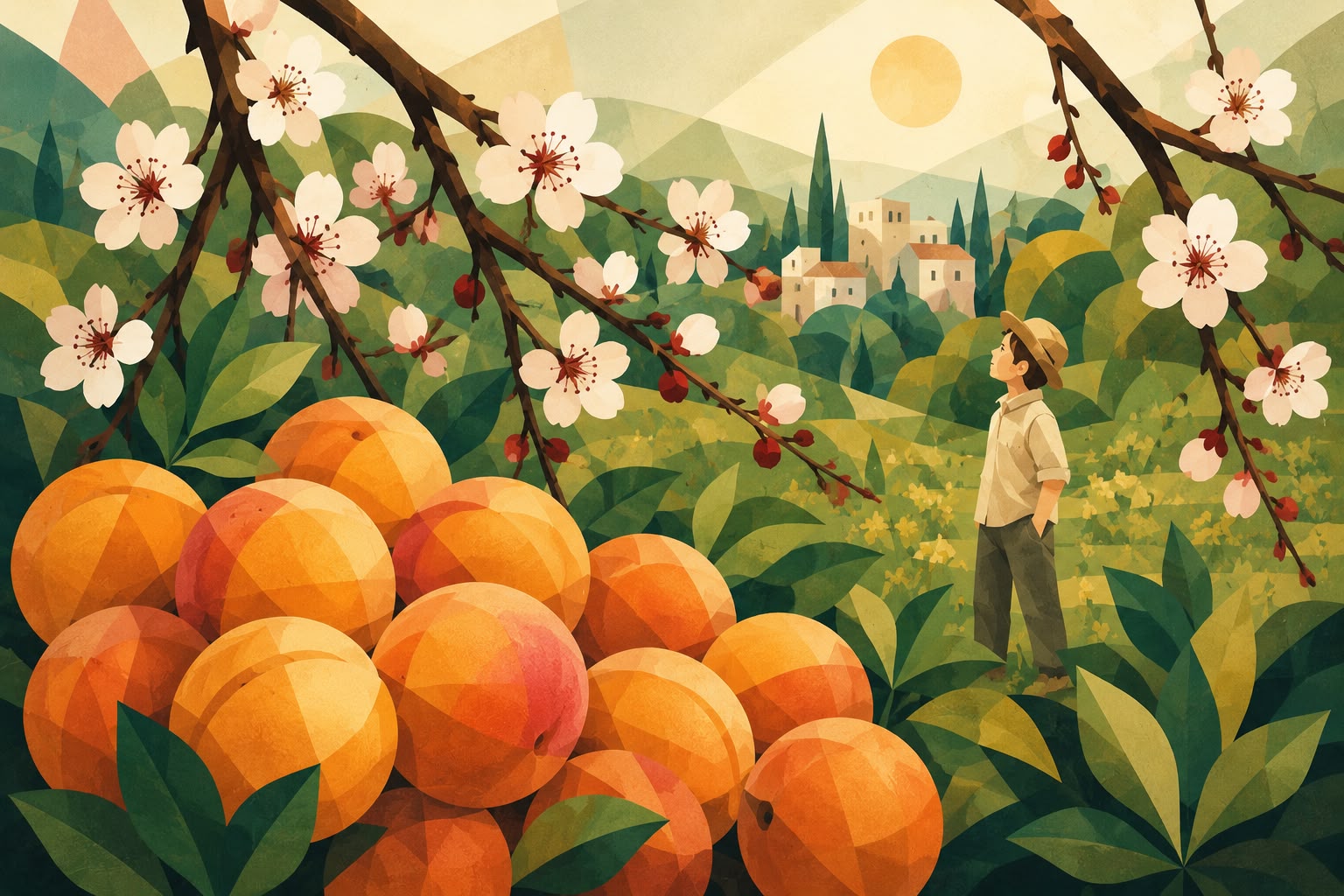
The phrase refers to the famous Hama apricot, also known as the “Sultani Apricot” and the “Kafouri Apricot.” Among its well-known varieties are the “Pearl Apricot” and the exceptionally sweet “Daghimshi Apricot.”
Apricot trees are among the most famous fruit-bearing trees cultivated in Hama and its countryside. Syria today ranks first in the Arab world and eighth globally in apricot production. Hama’s reputation in apricot cultivation became so widespread that the Dutch orientalist Reinhart Pieter Anne Dozy referred to the fruit as “Al-Hamawi” (the Hamawi Apricot), in reference to the city of Hama.
The fruit’s fame and sweetness led many travelers to mention it among the finest delights of Hama. The famous traveler Ibn Battuta wrote that Hama was abundant with fruits, including the almond apricot whose pit contains a sweet almond-like kernel.
The close association between apricot trees and Hama also influenced traditional crafts. Apricot wood was used in constructing parts of the famous Hama waterwheels (Norias), particularly a thick component known as the “Sirr,” which forms part of the wheel’s central structure.
Apricot cultivation spread widely throughout the orchards and agricultural lands surrounding Hama, as documented in historical endowment records and legal deeds.
The Hamawi apricot is considered among the finest apricot varieties due to its rich flesh, distinctive flavor, and attractive appearance. The celebrated poet Ibn Hujjah Al-Hamawi praised it in comparison to the Damascene apricot, highlighting its superiority in taste and character.
Historian Muhammad Kurd Ali also noted the uniqueness of the Hamawi apricot in his book Khitat Al-Sham, observing that while Damascene varieties were widespread, the true Hamawi apricot remained rare and unmatched in flavor.
For centuries, people across Greater Syria eagerly awaited the ripening of Hamawi apricots. Historical chronicles carefully recorded the dates of their appearance, harvest seasons, and even fluctuations in their market prices.
Historians such as Ibn Tulun documented the fruit’s arrival in Damascus markets and distinguished its value from other apricot varieties. Over time, Hamawi apricots became significantly more expensive than local alternatives despite their abundance.
Their reputation grew so remarkable that they were frequently exchanged as gifts among governors, princes, and notable figures. Historical correspondence contains elaborate descriptions of Hamawi apricots, comparing them to pearls, stars, honey, and precious jewels.
Poets also celebrated the arrival of Hamawi fruit gifts. The renowned Egyptian poet Ibn Nubata wrote elegant prose and poetry praising shipments of Pearl and Daghimshi apricots sent from Hama.
Beyond fresh consumption, Hamawi apricots became an essential ingredient in traditional beverages and sweets, most famously Qamar al-Din. They even inspired local nicknames, with some people being called “Mishmish” due to the rosy color of their cheeks.
One famous anecdote recounts a fruit vendor who shouted “Your last days, O Apricot!” while selling apricots during the era of Syrian president Adib Al-Shishakli. The phrase was interpreted politically, leading to the vendor’s arrest by security authorities.
The article concludes with a beautiful poetic image by Najm al-Din al-Tanukhi al-Baalbaki describing the Hamawi apricot:
“The lovers wondered at my yellow color,
After once being green like emerald.
They did not know that I had fallen in love,
So my color turned golden while my heart was broken.”