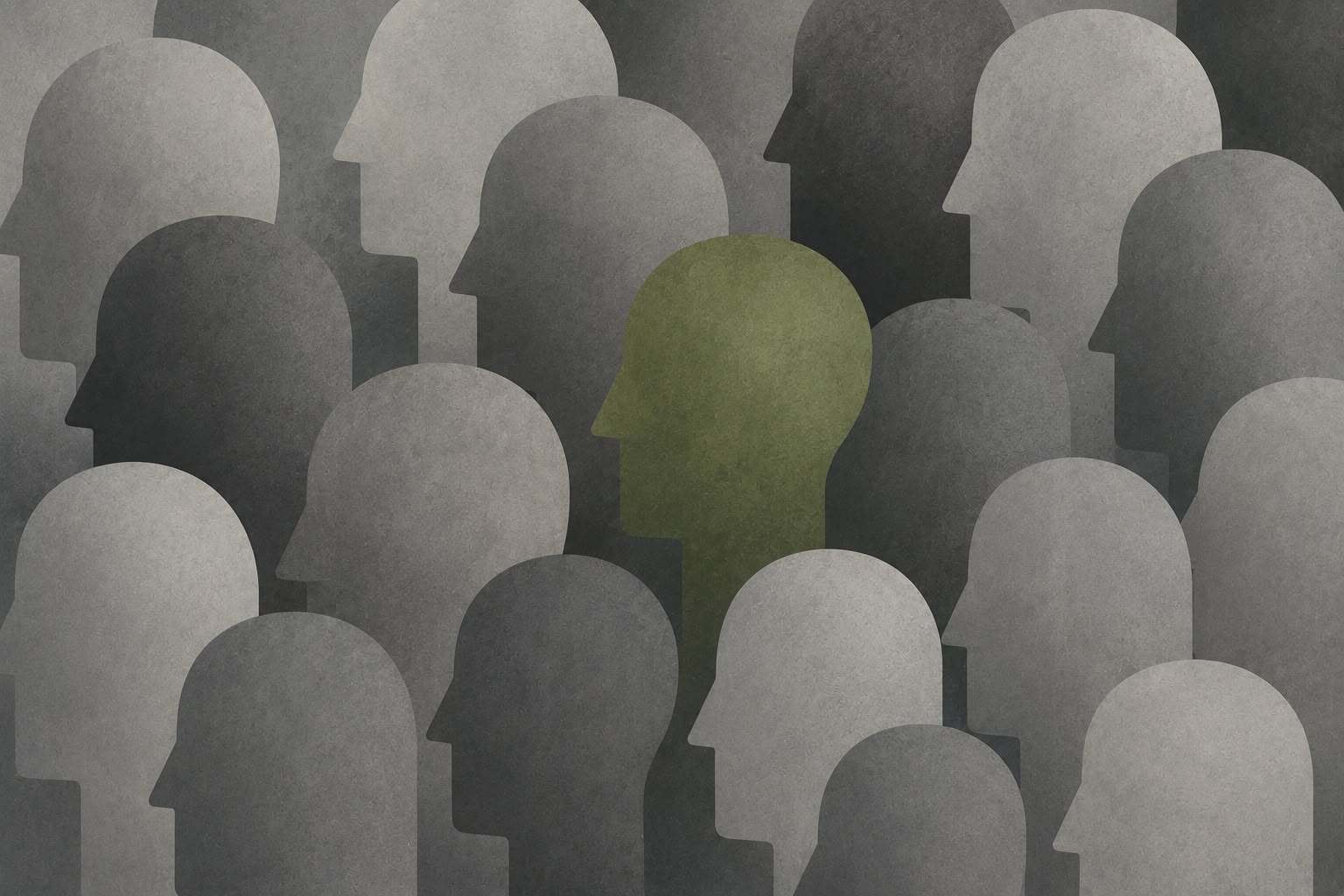
And the first words were: “Don’t compete with us for space.”
Before I return to the little girl stumbling through questions of identity and belonging, let me leap many years forward.
To that stage in life where I thought I had finally moved beyond all of this.
I was planting my dreams patiently, building my experience year after year.
Every morning, I walked into work carrying the confidence of someone who knew exactly where she belonged.
I discussed, suggested, objected, dreamed, and moved through the place with complete spontaneity, as if I were an organic part of its fabric.
I rarely thought about belonging. I was too busy living life itself. Achievement has a strange ability to silence postponed questions.
When you are deeply occupied with building your future, you no longer pause to ask whether you truly belong to the land where you plant your dreams. All that matters is that your tree keeps growing. But some words possess a terrifying ability to awaken the quietest wounds.
The deepest sleeping ones. It came from a single person — someone who represented no one but himself.
He said it with painful simplicity:
“Don’t dream too much… no matter how far you rise, you’ll never reach where you want to go. You are not from here.”
The sentence itself was not the most painful part. What hurt was the old meaning hidden behind it.
That familiar feeling haunting many children of exile:
That no matter how deeply you love a place, no matter how much of its memories live inside you, there will always be someone who sees you as temporary. A long-term guest.
Someone constantly required to justify their presence.
And because painful words rarely come alone, another phrase followed:
“Don’t compete with us for space.”
As though belonging were private property. As though love could be distributed according to official documents. And to be fair, throughout my life I had heard the exact opposite thousands of times.
People embraced me sincerely and said:
“You are one of us.”
“You are our daughter.”
“This is your home.”
But human beings are strange creatures.
Sometimes a hundred flowers cannot erase the memory of one thorn.
Modern social psychology confirms this truth:
Experiences of rejection leave deeper marks than positive experiences, because the human brain is biologically wired to treat threats as more important than reassurance.
So the sentence was never just a sentence.
It was an invisible hand shaking an entire tree from within.
And suddenly, old questions returned.
Who am I? Where should I plant my roots? Can a person truly belong to a place they were not born in?
Or do some doors remain half-closed forever? During that period, I lost part of my passion.
Not because I stopped loving the place… But because I became exhausted trying to explain that love.
So I decided to leave. Not in search of a new opportunity.
Not in search of a different life. But in search of myself.
I thought distance might give me answers. That perhaps new cities could tell me where I truly belonged.
But deep inside, I already knew I would carry the question with me wherever I went.
Because sometimes the problem is not the place we live in…
But the place living inside us. And so I left. I carried my luggage, my dreams, and my unanswered questions.
And I discovered something unexpected. Exile is not always being far from your homeland.
Sometimes exile is trying to convince yourself that you can live far away from what you love.
During that time, Carol Samaha’s song “Wahshani El Donya Bbaladi” accompanied me constantly.
It left a heaviness in my chest I could not explain. Because I was not missing a city alone. I was missing an entire feeling.
I missed the faces that witnessed my transformations. The places where I had left different versions of myself behind.
Or as Ahlam Mosteghanemi once wrote:
“Places do not leave us when we leave them. They carry a part of us and leave a part of themselves within us.”
And as Amin Maalouf wrote:
“Identity is not an ID card, but the sum of everything we live, love, lose, and carry through time.”
Human beings cannot be reduced to one origin.
Or one passport. Or one city. We belong to every place that left an imprint on us. And to every memory that shaped who we became.
And after months, I returned. I returned after realizing that one cruel person — or angry strangers online — should never have the power to steal my sense of belonging.
I returned to continue planting. Not to prove anything to anyone. Not to demand recognition.
But because I finally understood that true belonging is not granted by others.
And therefore, it cannot be taken away by them either. And when I heard the same song again after returning… I felt nothing at all.
And perhaps that was the most beautiful feeling of all. Because I finally understood that I had never been searching for a lost homeland. I had simply been searching for peace with it. And I understood that some of us are born carrying more than one identity.
More than one memory. More than one story. And that this is not a deficiency.
It is a rare human richness.
“Great trees are not the ones with a single root… but the ones that learned how to cling to life, no matter how many winds shaped them.”
So when someone says today:
“Don’t compete with us for space.”
I simply smile quietly.
Because I realized, perhaps too late, that the real homeland was never merely a piece of land.
It was that safe corner we build inside our hearts… and choose to call home.