
Homs... From Ancient Emesa to the Syrian Revolution
Homs is not merely a city on the map of Syria, nor is it just a name associated in recent years with war, siege, and revolution. Rather, it is a city that holds within its memory thousands of years of history—a city traversed by civilizations and empires, preserving in its stones, streets, markets, and landmarks the stories of successive generations who lived there, built their identities, and left their mark for those who followed.
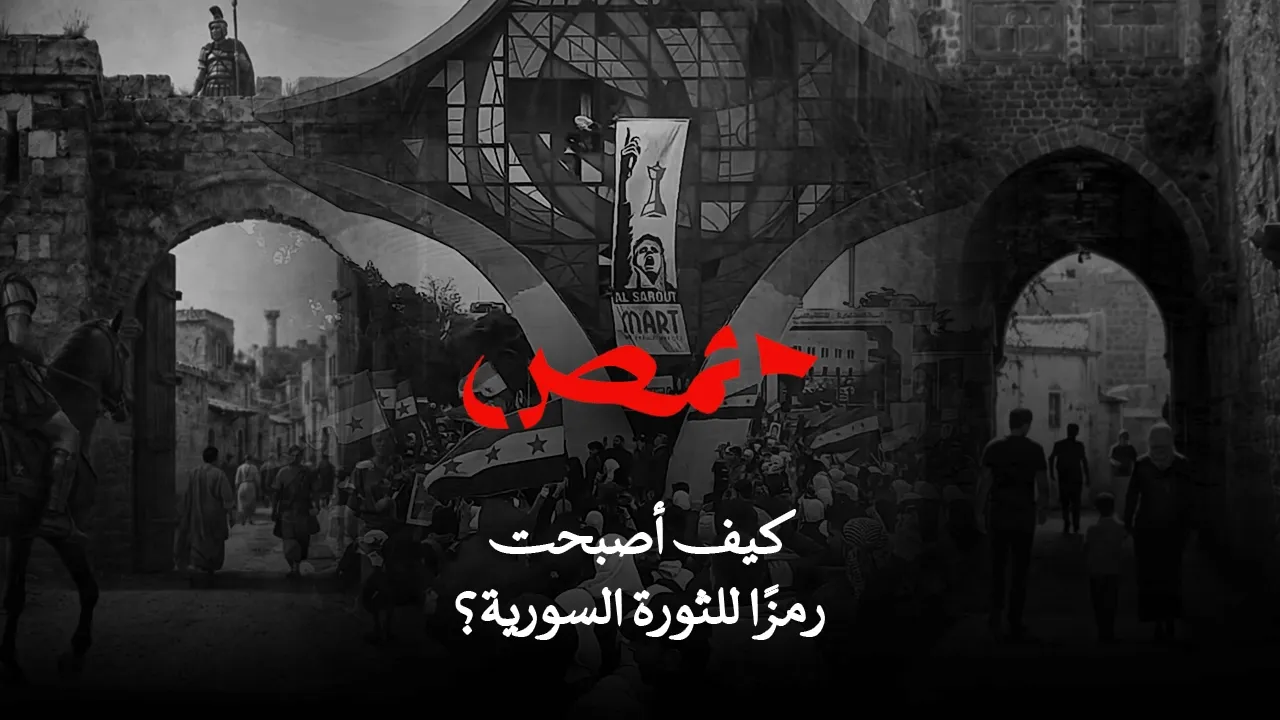
- City
- Homs
- Year
- 2026
- Duration
- 12:57
Homs is not merely a city on the map of Syria, nor is it just a name associated in recent years with war, siege, and revolution. Rather, it is a city that holds within its memory thousands of years of history—a city traversed by civilizations and empires, preserving in its stones, streets, markets, and landmarks the stories of successive generations who lived there, built their identities, and left their mark for those who followed.
From ancient Emesa to the Homs we know today, the story of this storied city spans major regional transformations. It lived through successive eras of Aramean, Assyrian, Babylonian, and Persian civilizations, followed by the Greek and Roman periods, before entering new phases under Islamic civilization and maintaining its enduring presence in the heart of the Levant. History left its imprint on the city at every stage—from its gates, walls, and ancient markets to its mosques, churches, and landmarks that still safeguard the memory of the place.
In the heart of Homs, the Clock Tower stands as a witness to the city’s modern era, while the Khalid ibn al-Walid Mosque, the Al-Nuri Mosque, and historic churches recount the religious and cultural diversity the city has experienced over centuries. Here, the monuments do not appear merely as old buildings; instead, they become open pages of Homs’s history, where civilizations, religions, and memories coexist within a single city.
Yet, Homs entered a vastly different chapter with the outbreak of the Syrian revolution in 2011, when large numbers of its residents took to the streets demanding freedom, and the city gradually transformed into one of the central arenas of events in Syria. The Homs Clock Tower became a symbol of sit-ins; subsequently, the city witnessed an escalation of violence, shelling, and battles. Entire neighborhoods turned into battlegrounds, while civilians paid a heavy price with their lives, homes, security, and futures. Then came the siege, marking one of the harshest chapters in the city's modern history. Besieged neighborhoods faced shortages of food, medicine, water, and electricity, alongside a constant fear of bombardment, while thousands of civilians lived in isolation for months on end. As the siege dragged on, Homs evolved from a city merely enduring war into a symbol of Syrian civilian suffering; its name became synonymous with discussions of the revolution, the siege, and displacement.
Amidst those years emerged Abdul Baset al-Sarout—a goalkeeper for Al-Karamah Club who became one of the most prominent voices of the Homs revolution. He sang for the city and for freedom, participating in the unfolding events before eventually taking up arms and losing his life. His voice and songs remain part of the Syrian collective memory, and his story stays forever linked to a city that was seeking its path through one of the most turbulent eras in modern Syrian history.
This is not merely a story of war, nor just a tale of revolution, nor a journey into ancient history alone. It is the story of an entire city—a city of homes, markets, neighbors, and memories—that found itself at the heart of events that transformed its landscape and the lives of its people. Today, the name "Homs" carries multiple meanings; within its very letters, one can find the story the city lived—a story spanning freedom and war, life and death, memory and oblivion.
In this documentary, we return to pre-war Homs, exploring a history that stretches back millennia. We wander through its landmarks, markets, mosques, and churches, before arriving at the year 2011. We witness how the city became a pivotal symbol of the Syrian revolution, how it endured years of bombardment, battles, siege, and displacement, and how its memory has endured despite everything it has undergone. Homs is the story of history dwelling within a city, and the story of the human spirit when a city becomes an integral part of one’s identity and memory. It is the tale of civilizations that passed through here, and of generations born, living, and dying here; of homes that once held the laughter of their inhabitants before bearing the scars of war; of streets that witnessed the city’s joys and sorrows; of squares that transformed into symbols; and of names that became etched in the collective memory of Syrians.
From Old Homs to the Homs Clock Tower; from the mosque, the church, and the market to the neighborhoods that endured the siege; and from the history of Emesa and ancient civilizations to the years of the Syrian Revolution—we seek to tell the story of a city that cannot be reduced to a single image or a solitary era.
This is Homs: a city that bore thousands of years upon its stones and the years of war within its memory, yet whose name remained ever-present in the hearts of its people. For ultimately, it was never merely a place; it was a home to people who loved their city, lived within it, and lost loved ones there—carrying its image with them wherever they went.